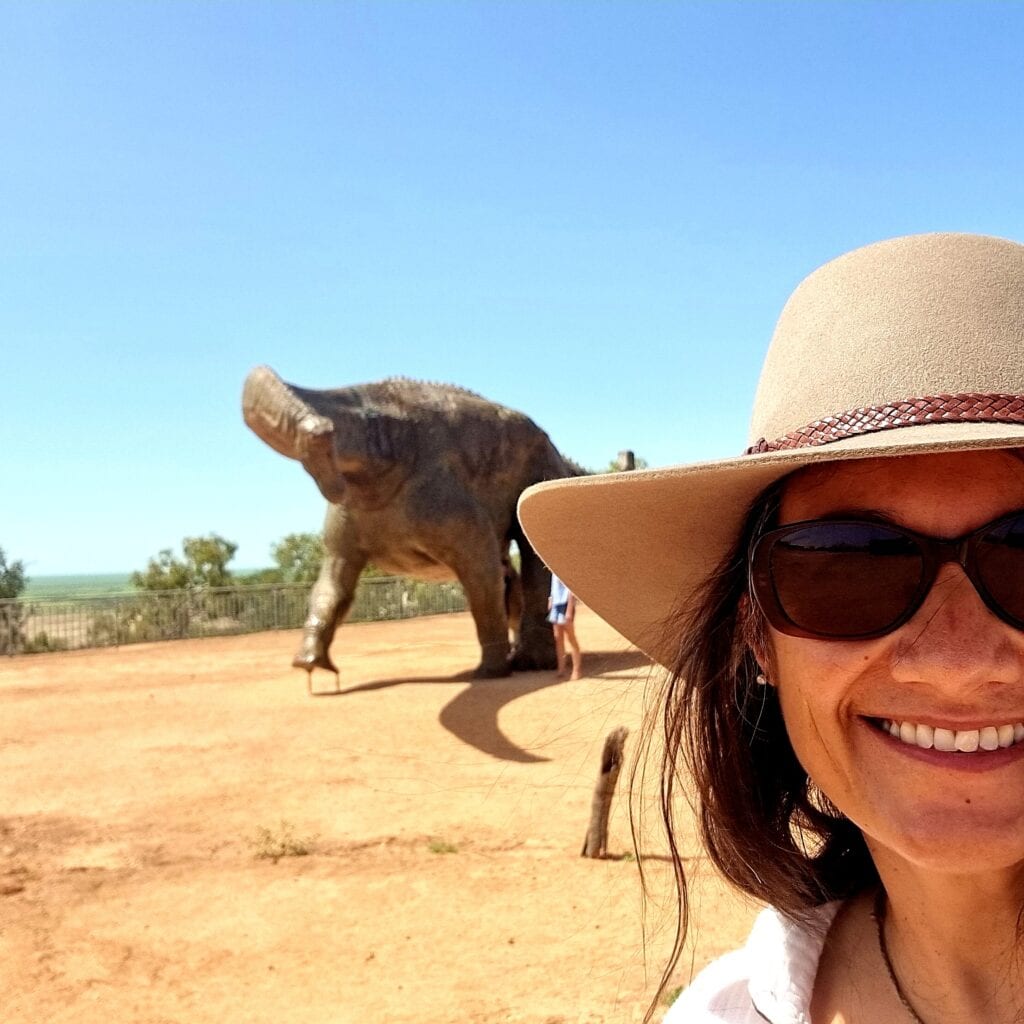
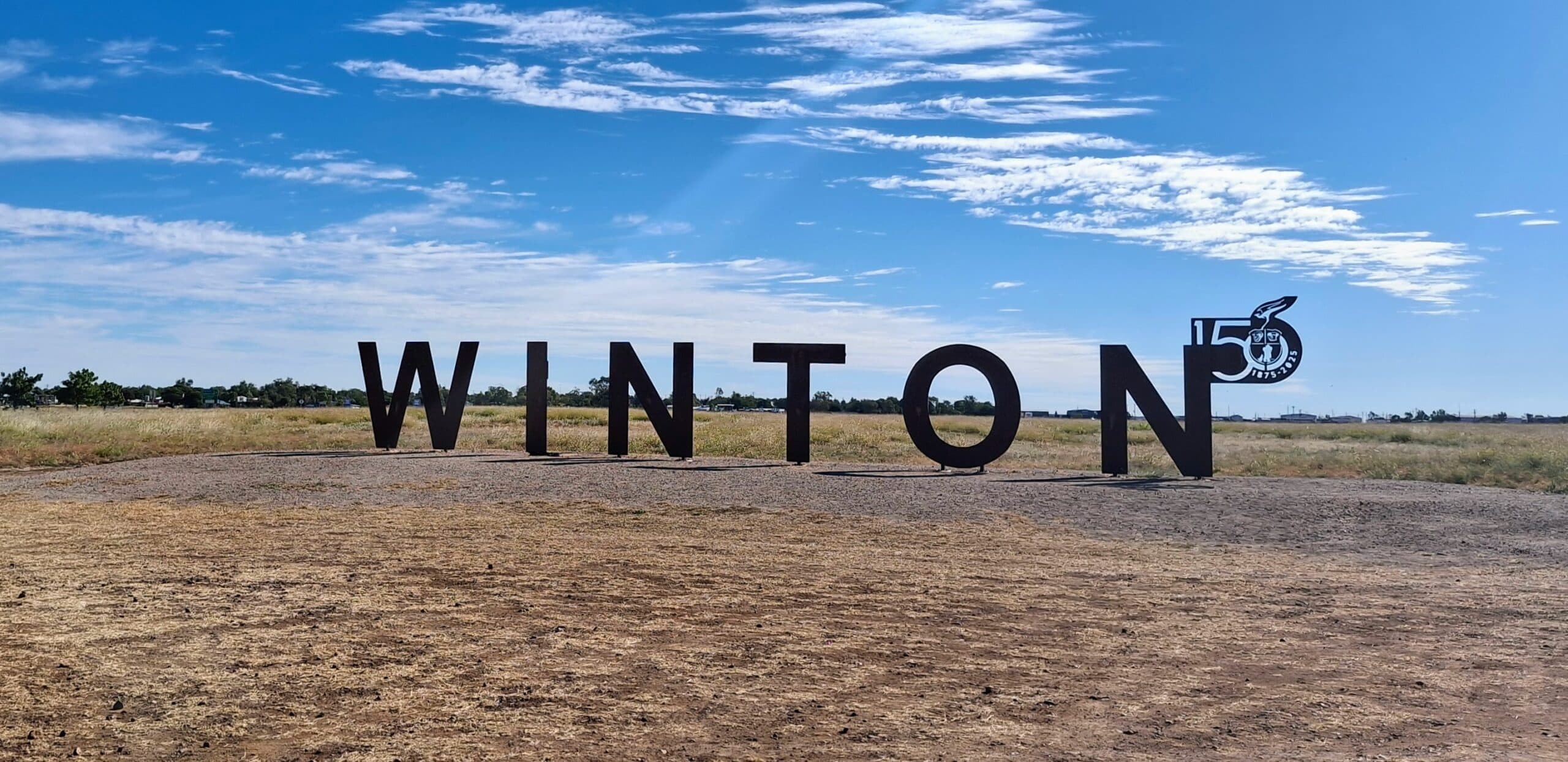
Winton holds special memories for me. This was part of my inaugural outback adventure as a Solo traveller when I drove to Boulia for the Camel Races in 2018 in my Hyundai Active X. I only spent 1 night back in 2018 in Winton, but I have been back and through several times. This small town on the edge of true Remote Queensland captured the heart of this traveller and fueled my wanderlust that continues today.
A Town That Was Never Meant to Matter — And Does Anyway
In 1875, Robert Allen arrived at Pelican Waterhole. He renamed the settlement Winton, after his hometown in Dorset. A practical decision, intended to simplify postal logistics. No grand vision. No intention of legacy.
And yet, names do carry weight.
By 1883, Winton had begun to take shape — a bank, a blacksmith, the slow emergence of a functioning outback town. When the railway arrived in 1899, connecting Winton to Hughenden and Townsville, it did more than move goods. It anchored the town during droughts that might have erased it.
Winton did not grow quickly. It adapted.
Opal was discovered at Opalton in 1888. Miners arrived. Then came Banjo Paterson in 1895. QANTAS in the 1920s. And much later, the fossil discoveries that would redefine the region entirely.
Winton did not become something new.
It became many things, layered over time.
Why This Place Works When You Travel Alone
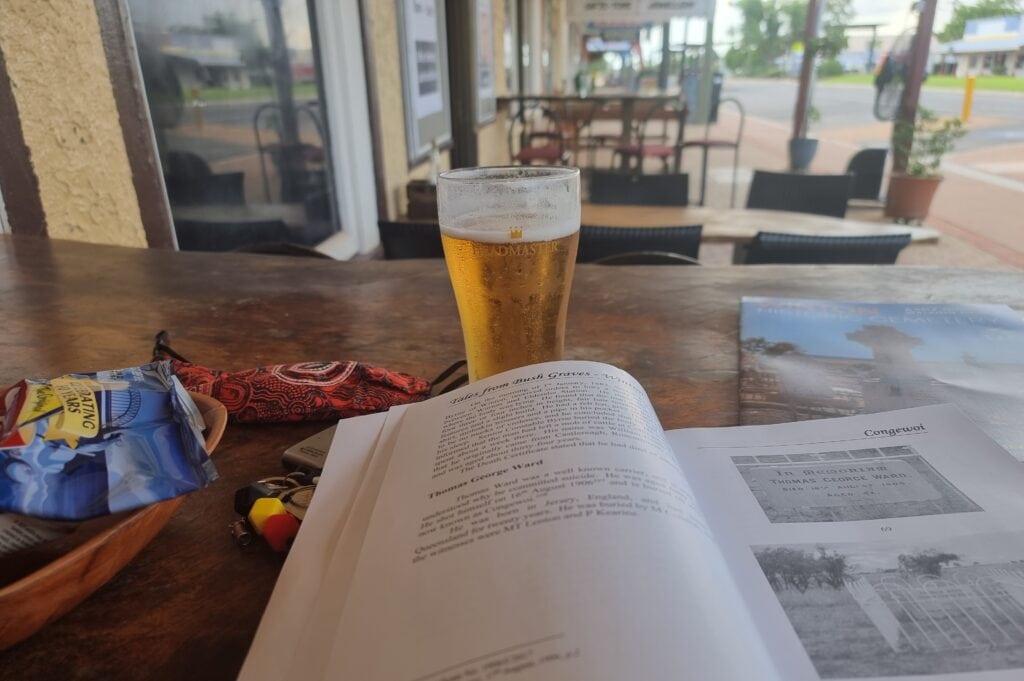
When you travel alone you rely on lot on your ‘spidey senses’ when entering a new town. The good thing with Winton is the people acknowledge you. Not in a way that demands conversation. Just a quiet recognition that you are new and you are there.
For a solo female traveller, this matters a lot.
Winton has always received travellers. Swagmen in the 1890s. Aviators in the early 20th century. Fossil hunters and historians now. Transient folk are not unusual here — it is expected.
And so independence is understood. You are left alone, but not unseen.
The Australian Age of Dinosaurs Museum of Natural History
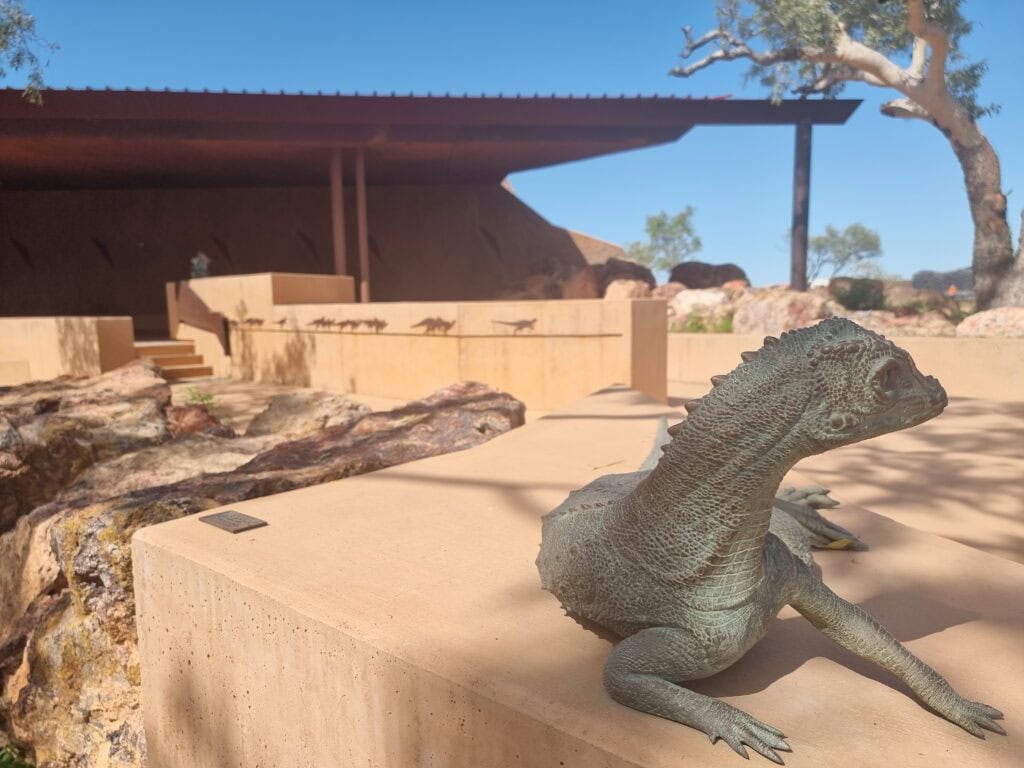
About 24 kilometres southeast of town the Australian Age of Dinosaurs Museum of Natural History sits on elevated land that feels deliberately chosen.
It is not a static museum. It is an active site of work. Fossils from the Winton Formation — dating back approximately 95 million years — are still being prepared, studied, and interpreted here. This is not a finished story. It is ongoing.
I completed the dinosaur tour, and it begins in the visitor centre. From there, you’re taken into an immersive theatre, which gives you perspective — not just on the dinosaurs, but on the landscape itself and what this region looked like when they lived here.
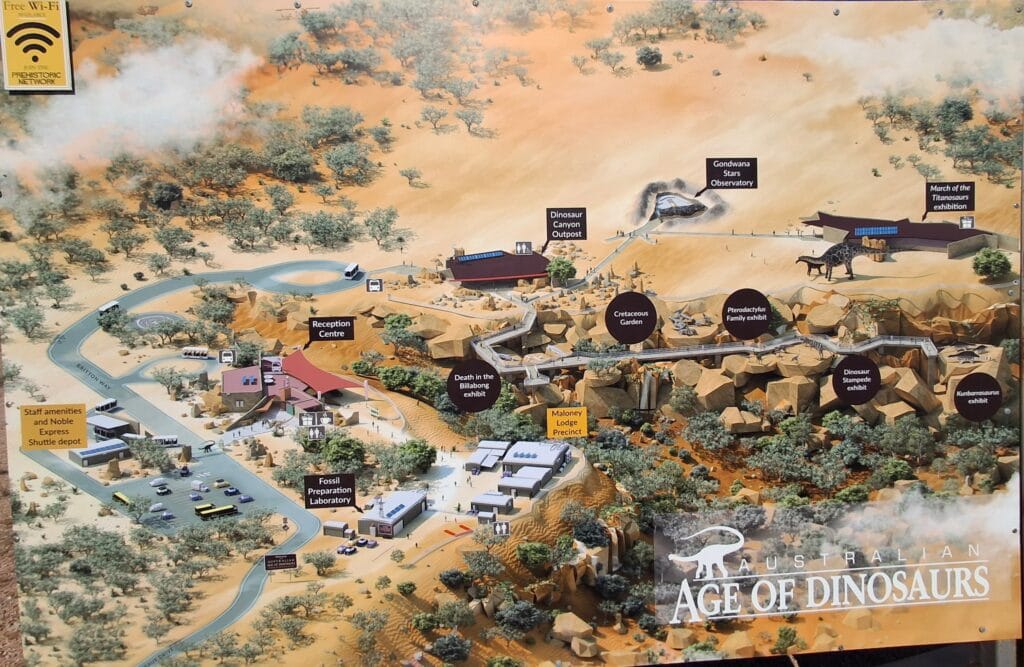
You then move through the preparation laboratory. Technicians sit over fragments of bone, working slowly and methodically. It reframes something many people misunderstand: discovery doesn’t end with excavation. It happens here, in the quiet, detailed work of revealing what’s been buried for millions of years.
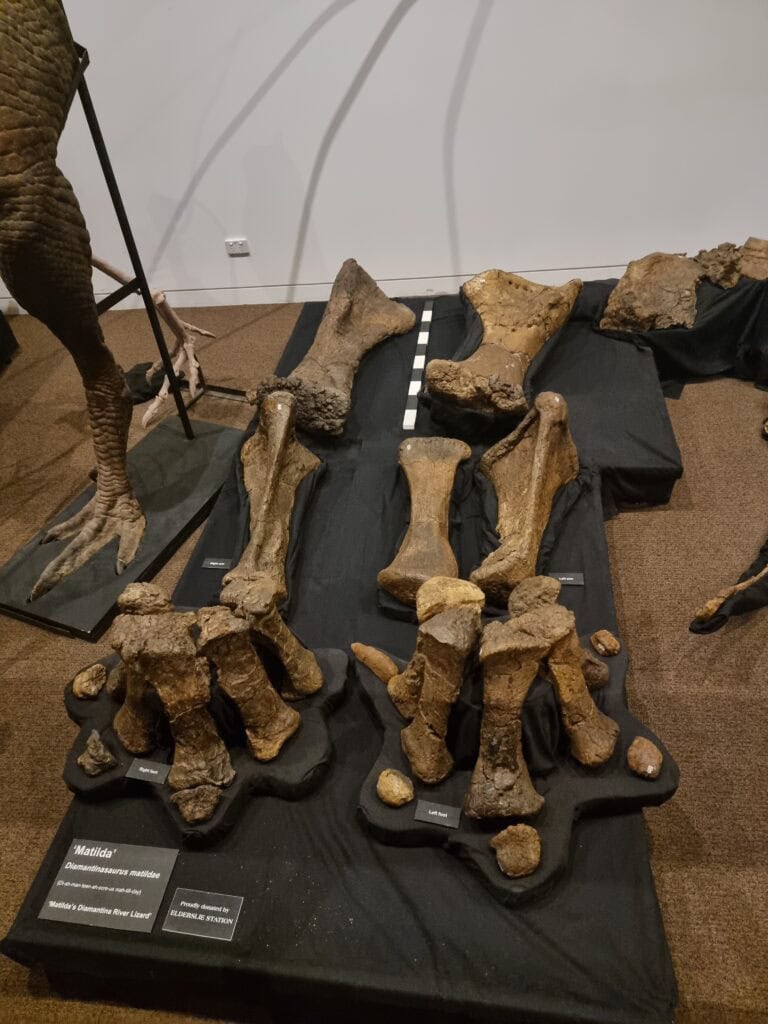
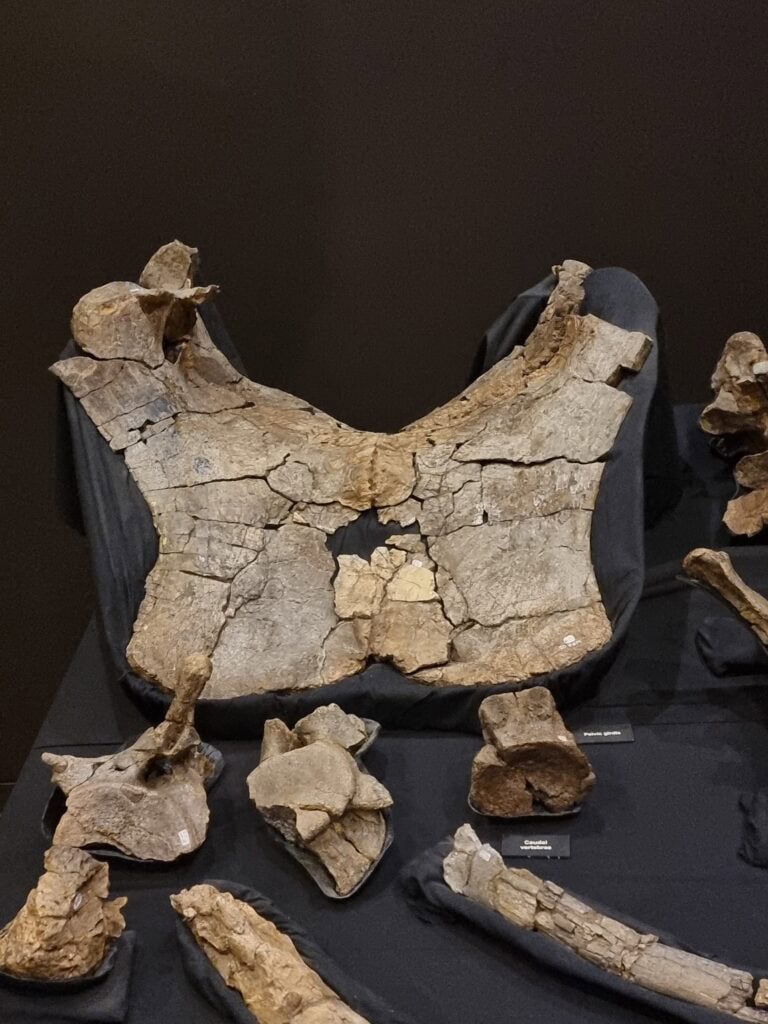
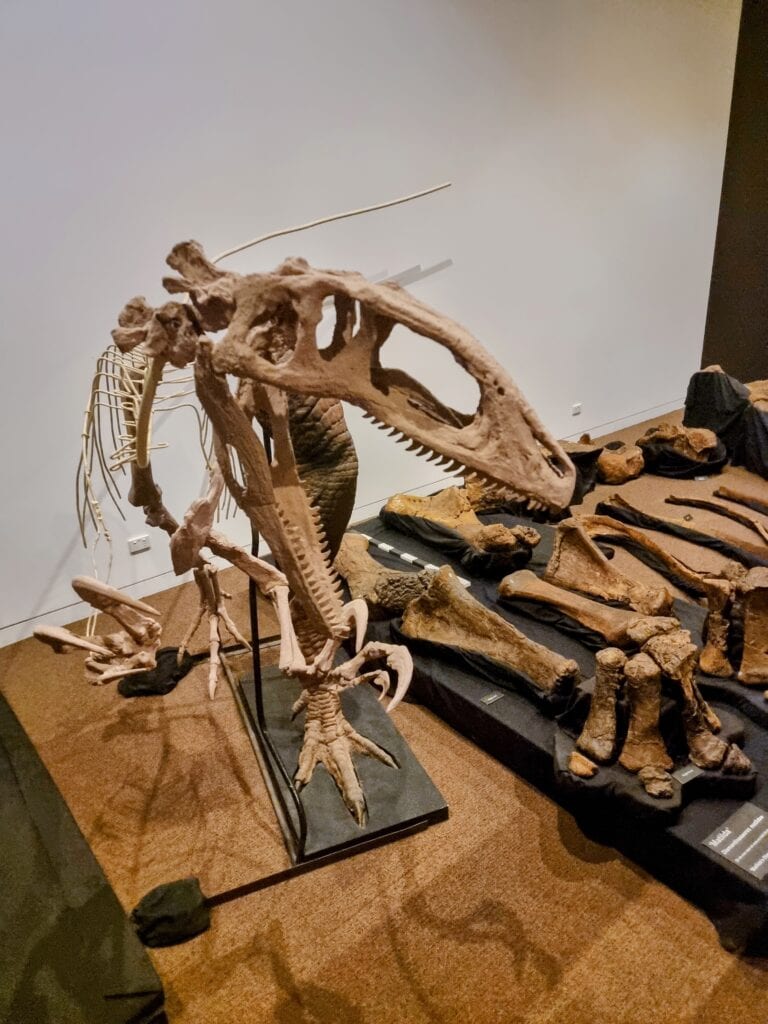
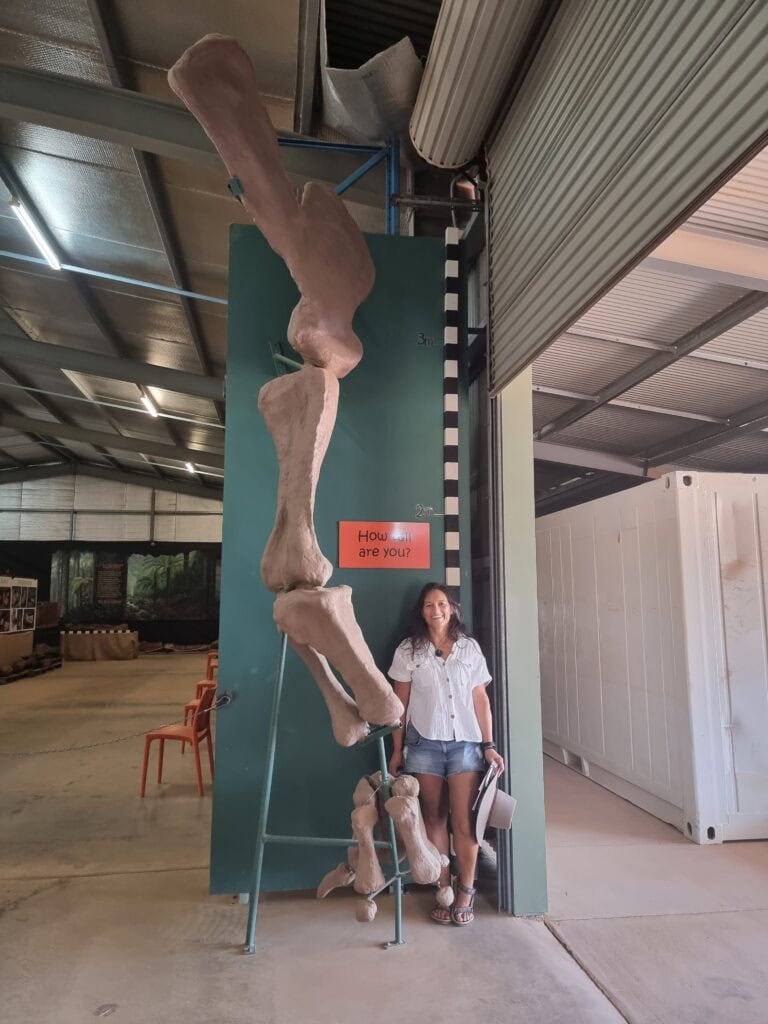
The main collection of dinosaur fossils houses the largest assembly of Australian dinosaur fossils and is the most productive preparation lab in the Southern Hemisphere. Standing beside a dinosaur leg bone gives context on how tall these creatures were.
The March of the Titanosaurs,
One of the most quietly powerful parts of the exhibition is The March of the Titanosaurs, where the Snake Creek tracksite is now housed. This isn’t a reconstruction — it’s the real surface, relocated and preserved, stretching over 50 metres and capturing a moment (or more accurately, a series of moments) from around 95 million years ago. What you’re looking at isn’t just dinosaur tracks, but a layered record of life moving through this landscape — sauropods, smaller dinosaurs, crocodile-like creatures, even turtles — all crossing the same ground at different times.
The idea of a single dramatic “stampede” has shifted with newer research. Instead, what’s revealed is something more complex and more real — a living environment, used repeatedly, where animals moved, fed, and passed through without knowing they were leaving behind a record that would outlast them all. This is mind blowing stuff!
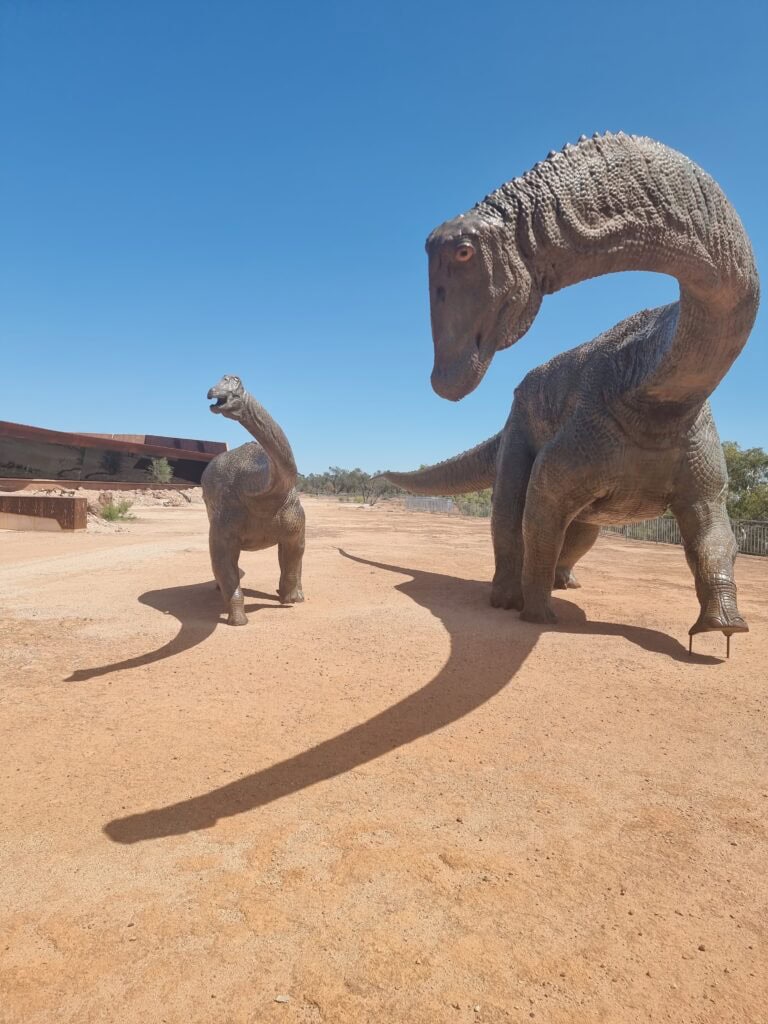
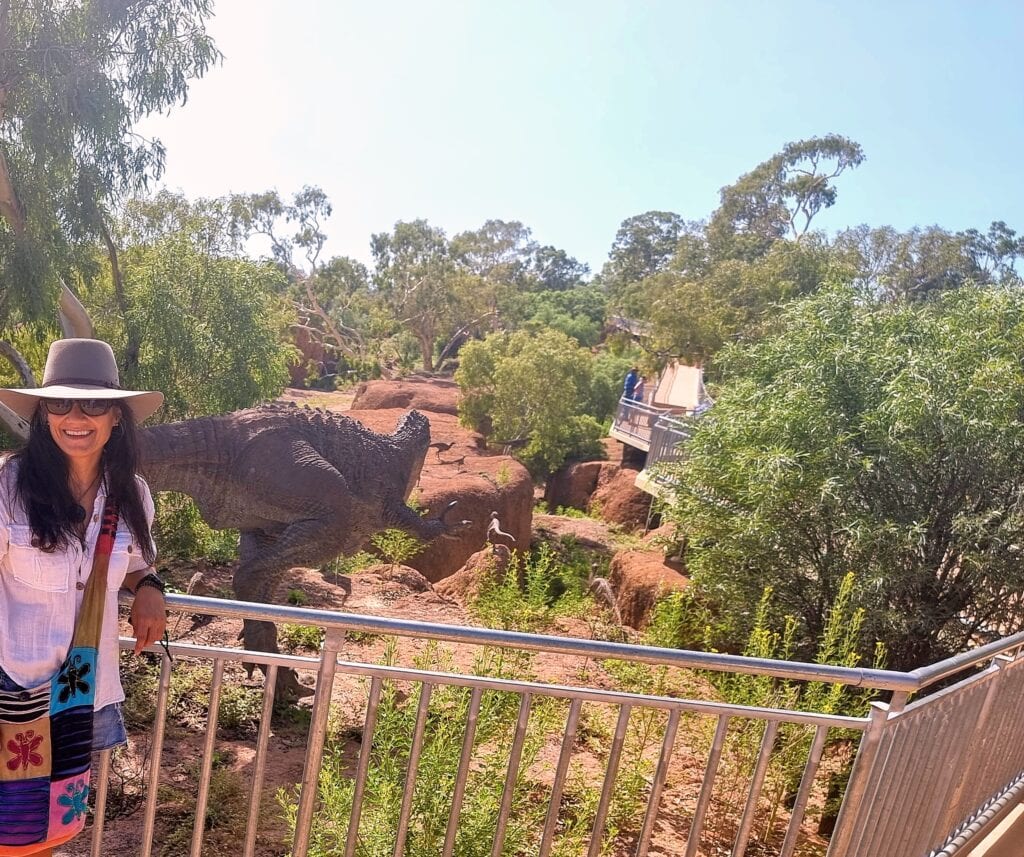
Lastly you’re taken down into Dinosaur Canyon on a big golf cart. There life-sized bronze figures stand against the natural terrain. Not arranged for spectacle, but for context. You begin to understand something that diagrams and textbooks can’t convey. These weren’t ideas. They were animals moving through environments that no longer exist.
The Landscape Before It Became This
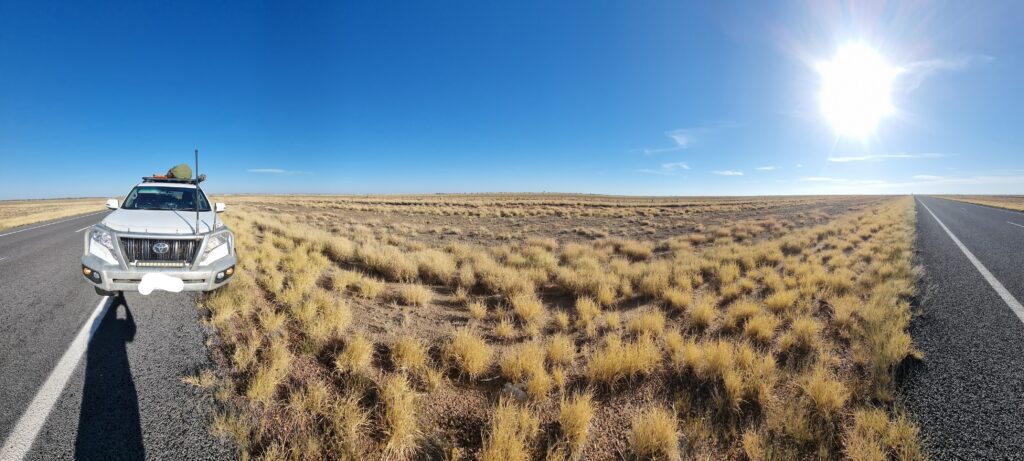
Ninety-five million years ago, this region was unrecognisable.
The Eromanga Sea covered much of Queensland. When it retreated, it left behind vast floodplains — humid, forested, alive with vegetation. Rivers the size of today’s Amazon moved across the land.
The Winton Formation — layers of sandstone, siltstone, clay — holds that memory.
What you see now is absence. What existed then was abundance. Understanding that changes how you stand in this place.
Travellers Heads Up:
- The museum is situated in the outback, and the weather can get very warm. Be sun-smart when visiting the attractions, as there are some outdoor experiences.
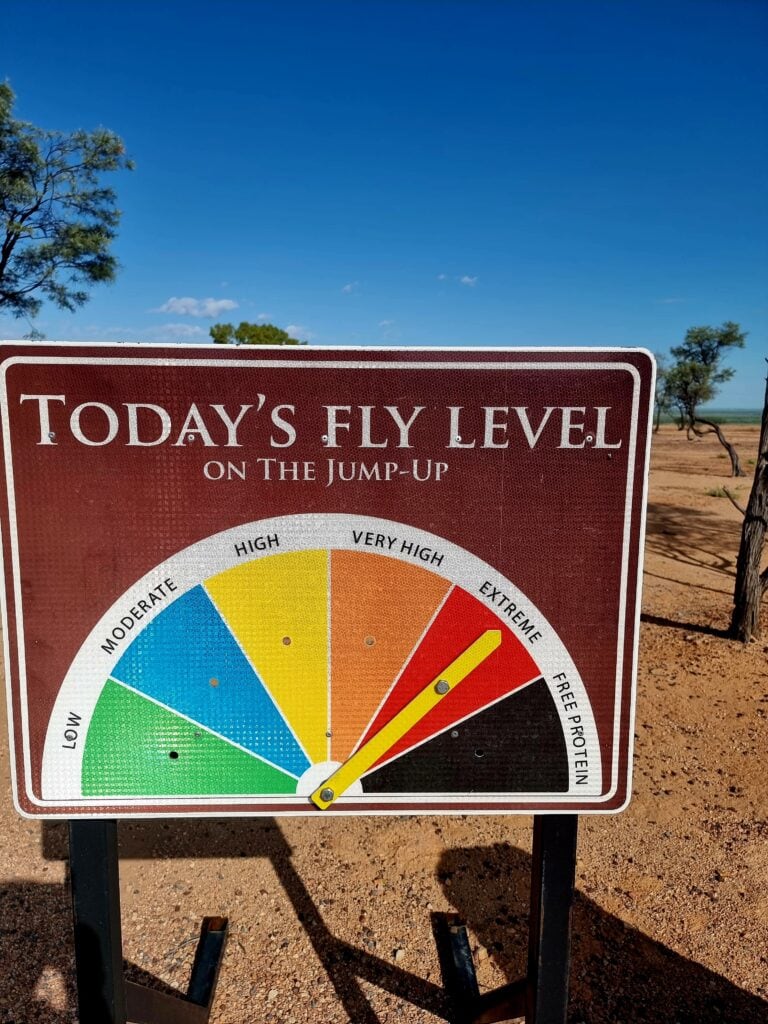
- There were a lot of flies when I went there. A fly net would be highly recommended.
- There is a kiosk at the museum for food and drinks. Remember water, especially for the young dinosaur enthusiasts.
The North Gregory Hotel
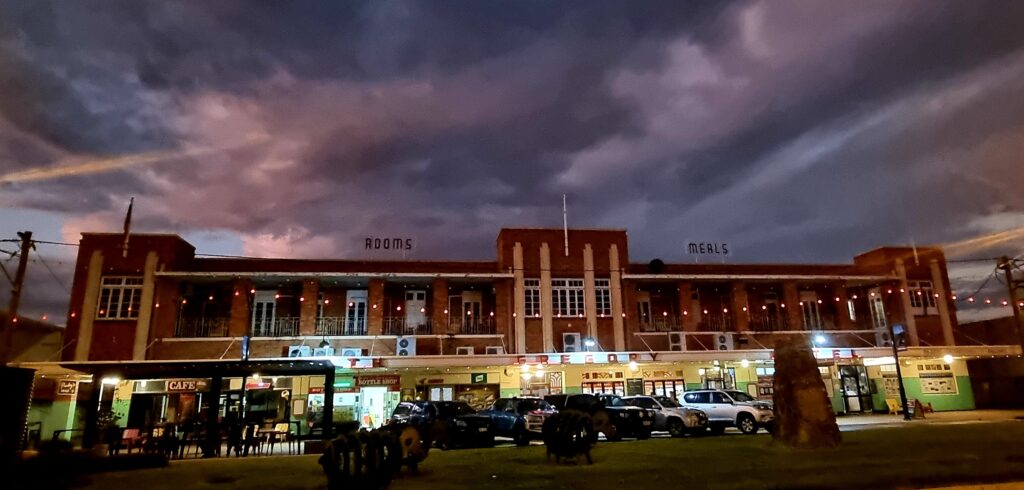
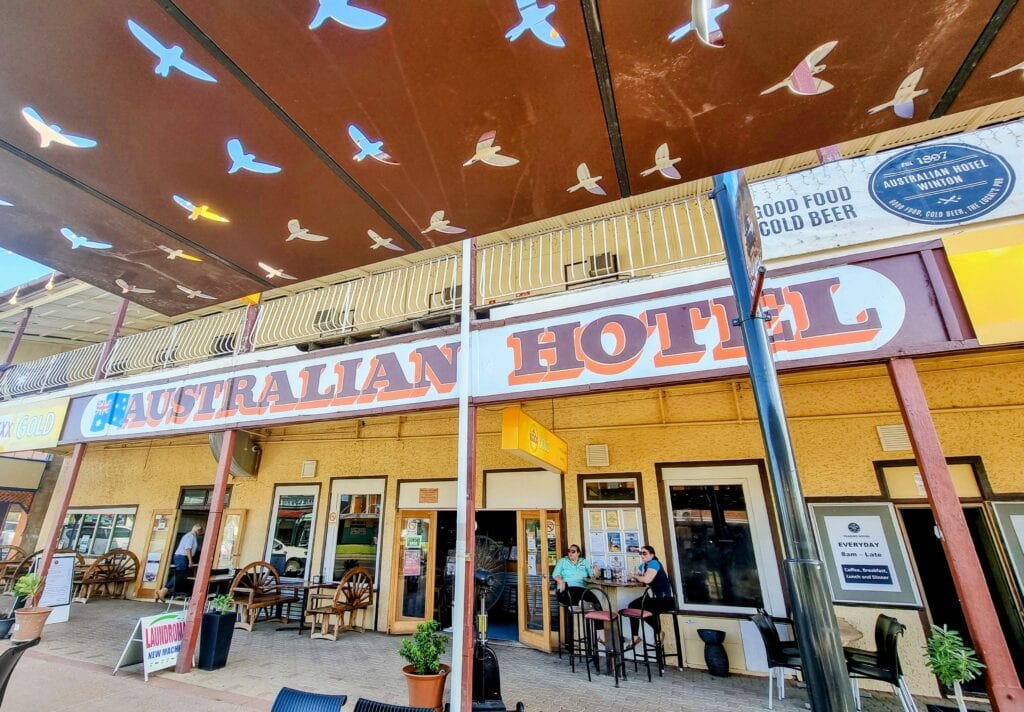
On Elderslie Street stands the North Gregory Hotel.
It is not subtle.
Its Art Deco facade suggests permanence, but its history tells a different story.
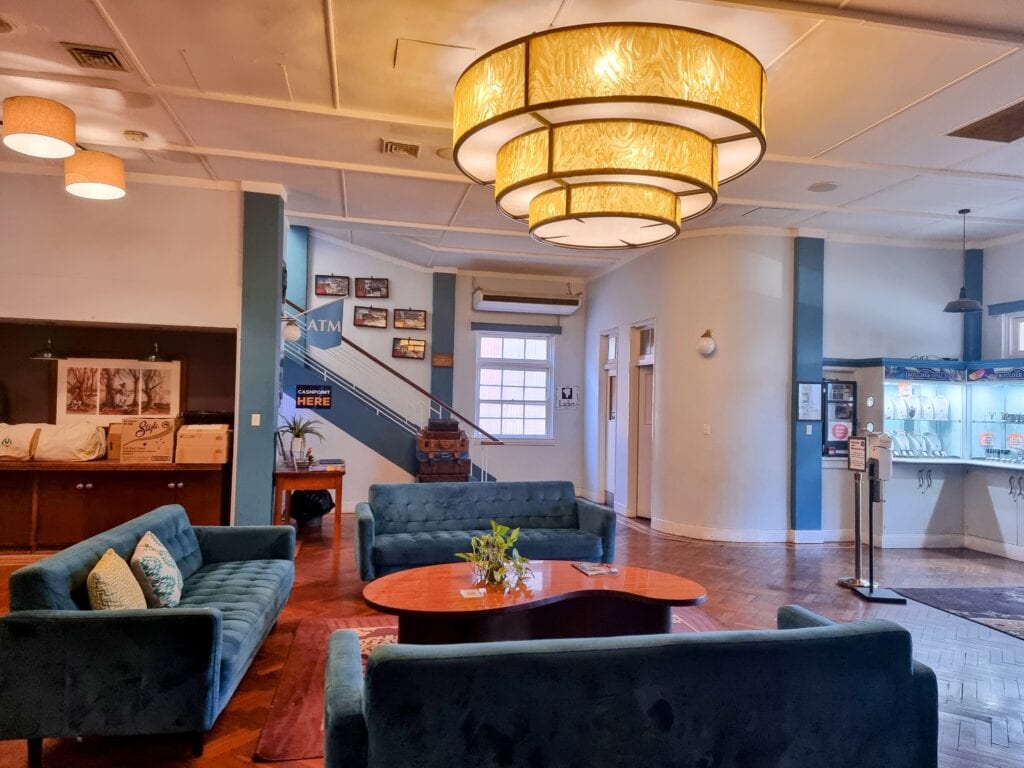
The original hotel opened in 1879. Timber. Corrugated iron. Functional. It burned. Rebuilt. Burned again. Rebuilt again. Four times in total. That alone says something about the town. But the significance of this building is not in its architecture. It is in what happened here.
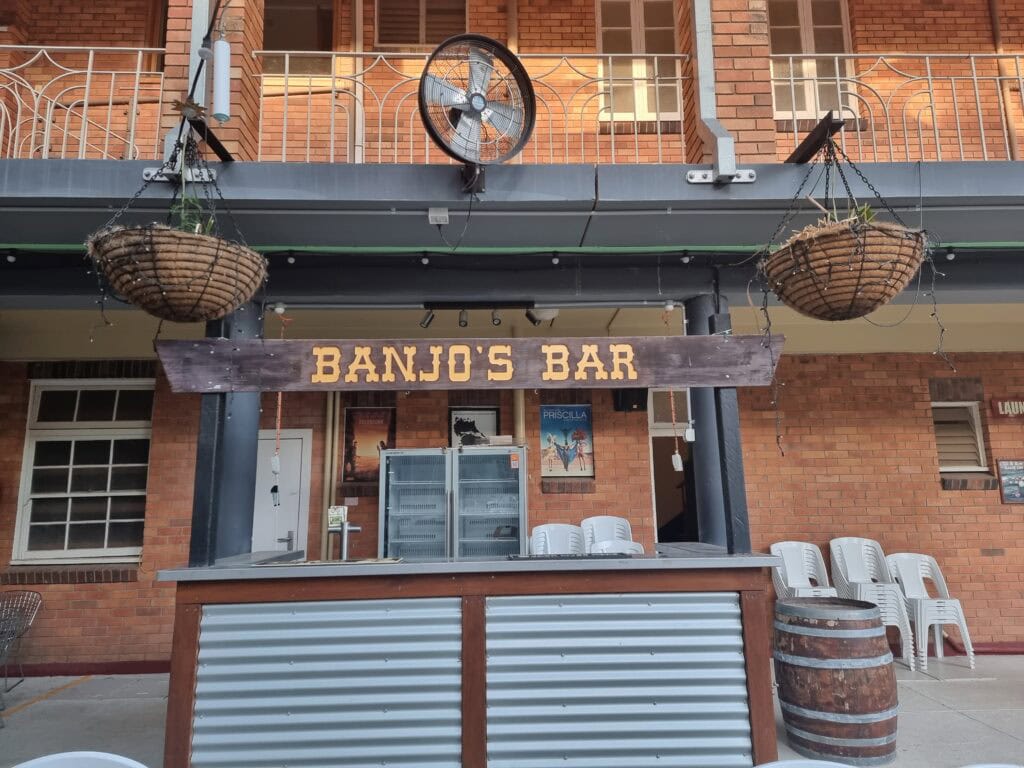
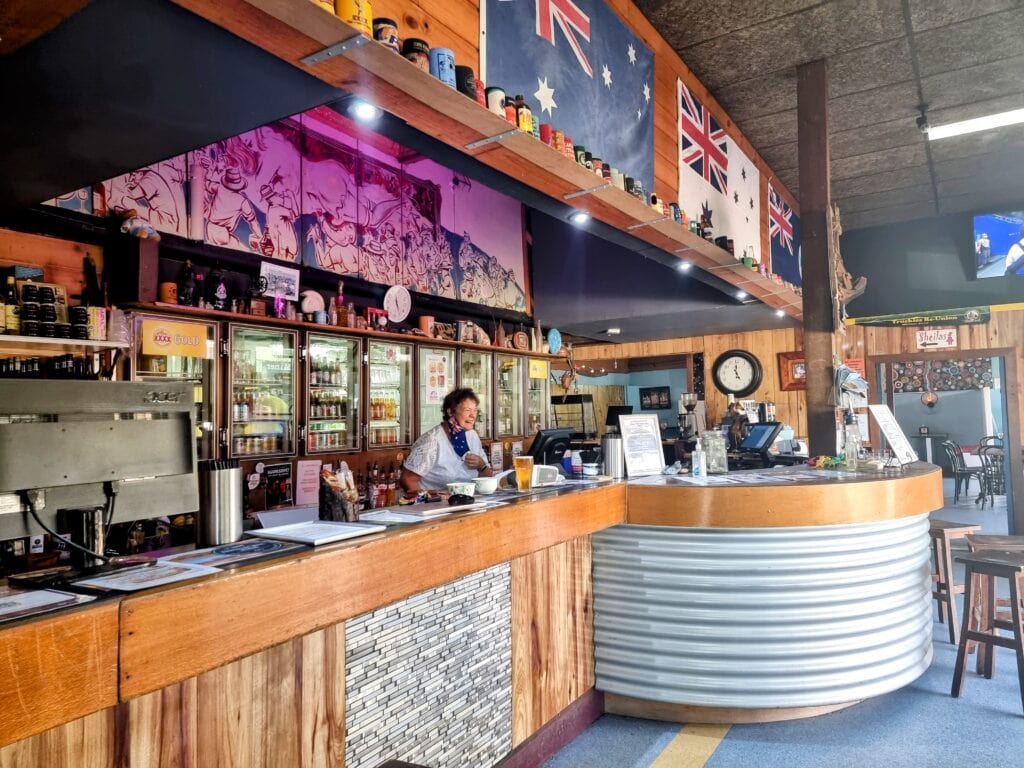
Its a place to meet the locals, have a meal and relax outside to the entertainment.
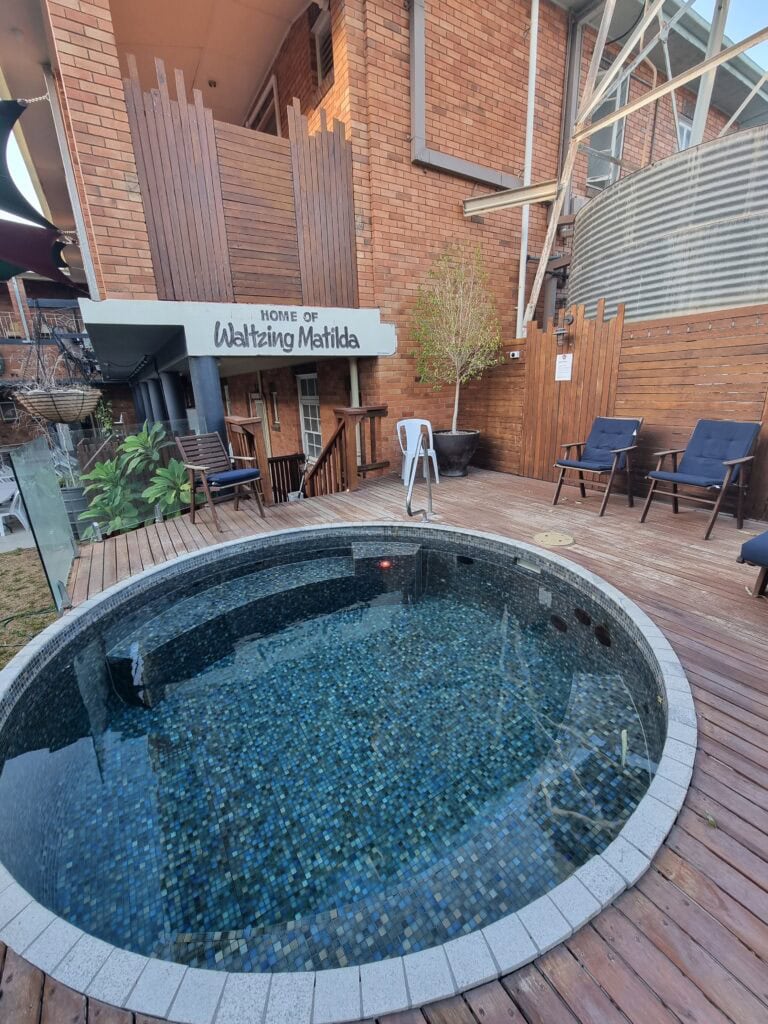
Waltzing Matilda: Banjo Patterson and Christina MacPherson
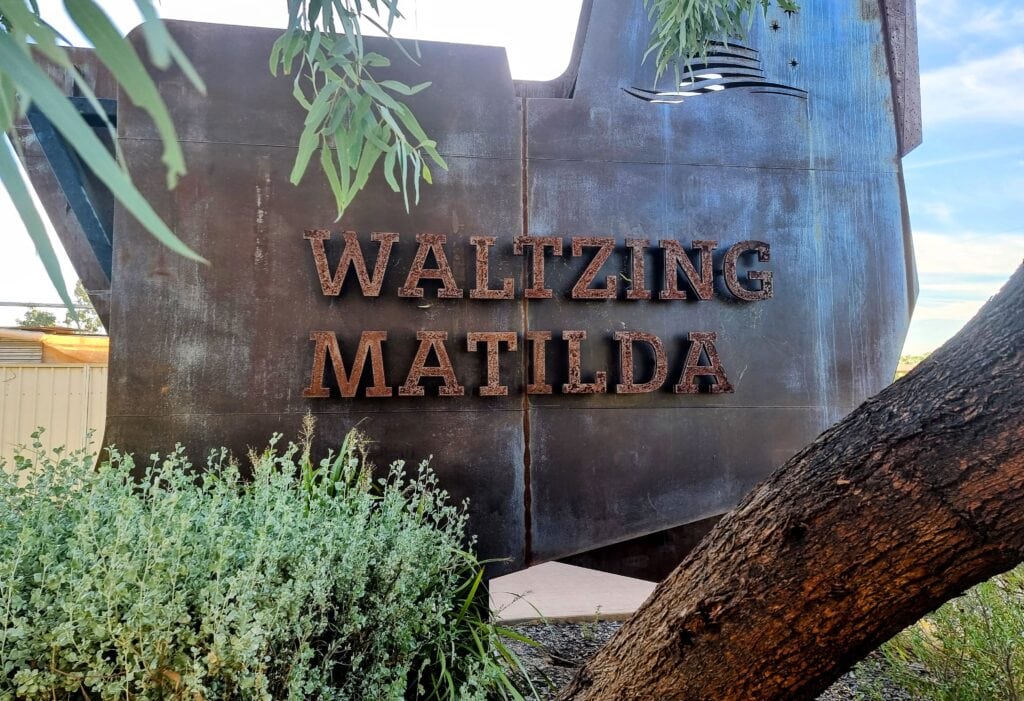
In April 1895, Banjo Paterson performed a new ballad inside these walls. Inspired days earlier at Dagworth Station, accompanied by a melody played by Christina MacPherson.
That ballad was Waltzing Matilda.
The story of a swagman, a sheep, a billabong, and a decision not to surrender. It became something more than a song.It became narrative identity, Australia’s second national anthem.
To sit here now — to have a drink, to eat a meal — is not about nostalgia. It is about proximity. You are in the place where something intangible became fixed in Australian culture.
The Waltzing Matilda Centre
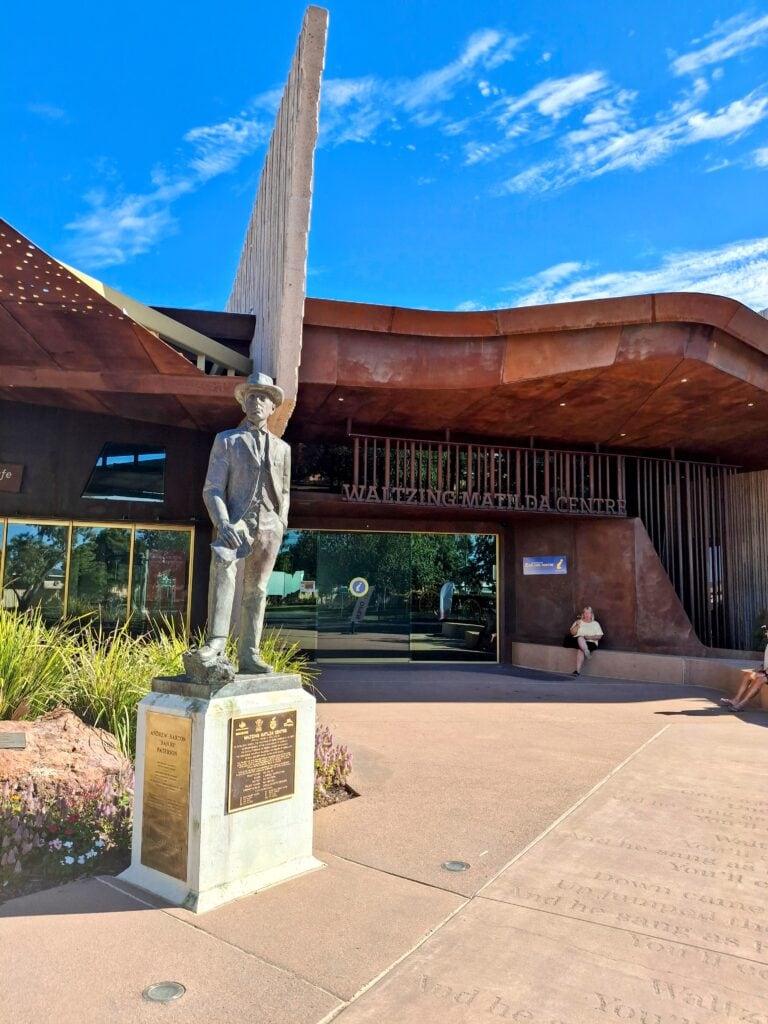
There is a risk in building a museum around a song. It could feel thin. Forced even. But Winton seems to pull it off.
The Waltzing Matilda Centre rebuild — after the 2015 fire — is deliberate in how it tells its story. Not just of Paterson, but of the conditions that produced the song.
The drought. The labour. The isolation.
The Billabong installation stands out. Not because it is visually complex, but because it shifts you into something less intellectual. You are not reading about the outback. You are placed inside its cycles. Light. Heat. Water. Absence. It holds your attention longer than expected.
Lark Quarry: The Moment That Stayed
About 100 kilometres southwest of Winton, inside Lark Quarry Conservation Park, lies something singular. 3,300 dinosaur footprints. What remains undeniable is this:
You are standing in the only known dinosaur stampede site in the world.
Or, at the very least, the closest we have come to witnessing one. The shelter built over the site is engineered carefully — temperature, humidity, preservation.
The road out there is mostly bitumen with the last 30mins well maintained dirt road.
Arno’s Wall: The Other Kind of Legacy
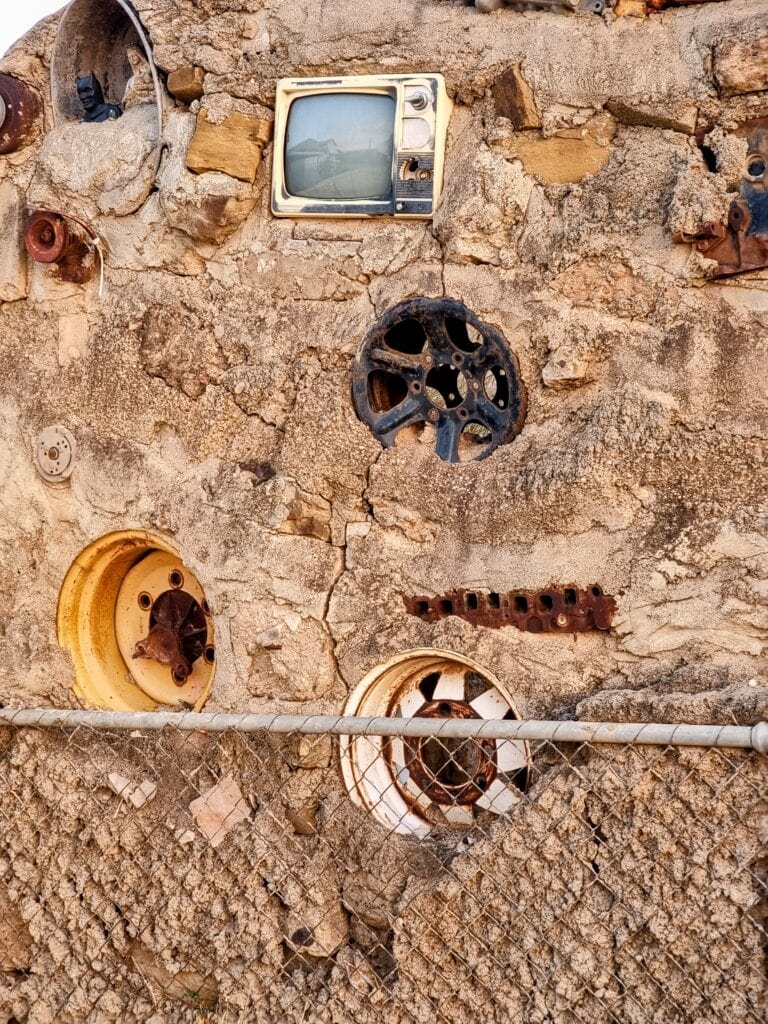
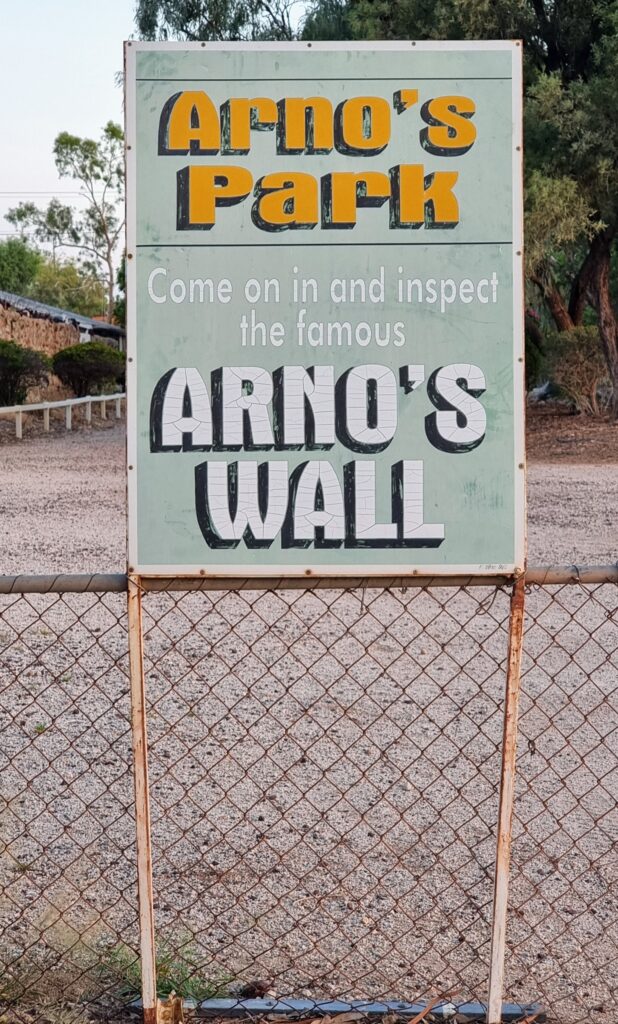
At 66 Vindex Street stands something entirely different.
Arno’s Wall stretches over 70 metres, embedded with objects that range from mechanical scrap to entire machines. It is the work of Arno Grotjahn. He was an opal miner who chose not to discard what he found. Instead, he decided to incorporate it.
It is not curated.
It is accumulated.
There is something distinctly outback about that — the refusal to waste, the inclination to build, the quiet insistence on leaving something behind that is entirely your own.
You don’t need long here. Itś at the back of the Gregory.
Practical Reality
Winton is small, but it functions.
You can walk it safely. Accommodation ranges from motels to the hotel itself. The Boulder Opal Motor Inn is a reliable option. Clean. Practical. No surprises.
Food is straightforward. Pub meals dominate. You will eat well and hearty.
Summer temperatures exceed 40°C. Winter nights drop low enough to matter.
Water, fuel, planning — these are not optional considerations. Driving here requires attention. Distances stretch. Wildlife moves at dusk. Night driving is not worth the risk.
But none of this is difficult. It just requires awareness.
Why Winton Stays With You
Winton does not try to impress. It does not present itself as a destination you must see. It simply exists — holding within it:
- evidence of a prehistoric world
- the origin of a defining cultural story
- the lived reality of outback persistence
For a solo traveller, that matters. You are not navigating performance. You are moving through something real. And that is increasingly rare.
The Birthplace of Qantas Airlines
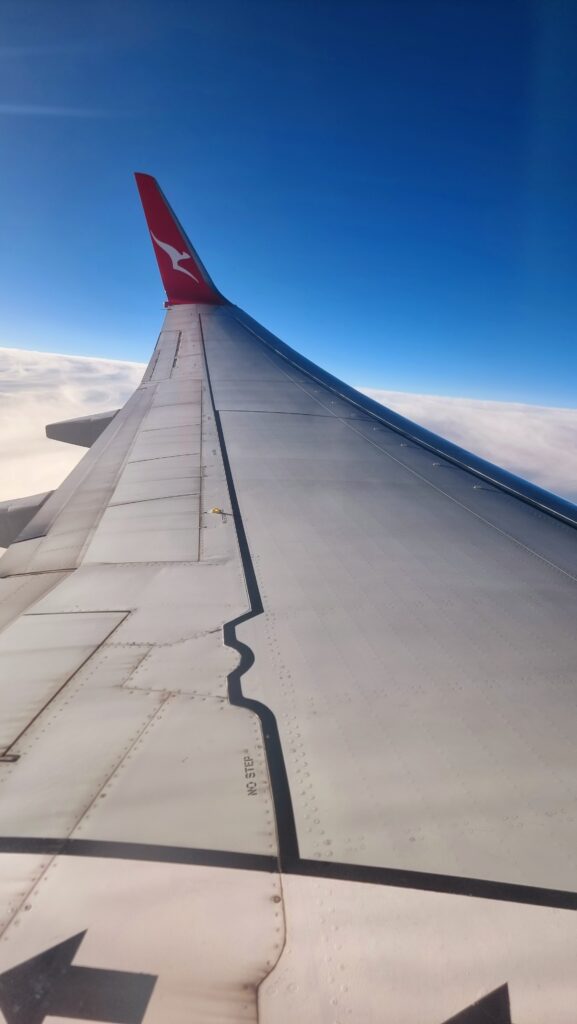
Winton also holds a quieter but significant place in Australian aviation history. While Qantas was officially conceived in Cloncurry, it was born in Winton on November 16, 1920. The main operation then moved to Longreach in 1921. It was Winton where the first Qantas board meeting was held. In a landscape defined by distance and isolation, the concept of flight wasn’t just innovation — it was necessity. What started as a practical solution to outback travel would go on to become Australia’s national airline.
Note: the Qantas Museum
Final Thought
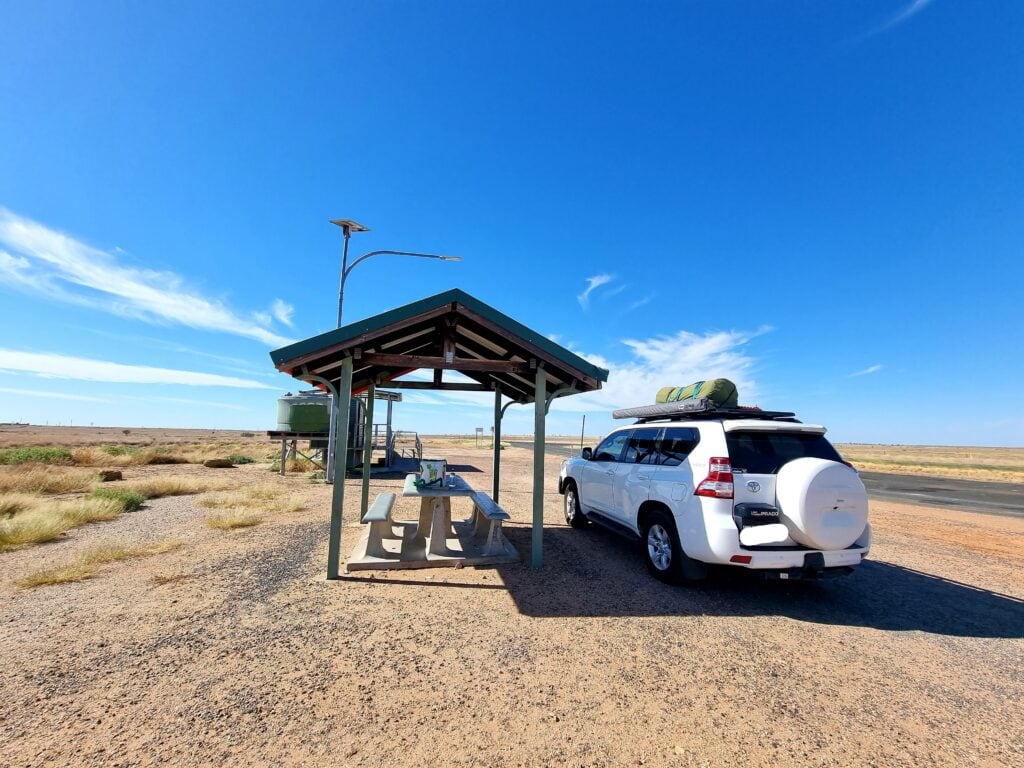
If you’re heading west to the Boulia Camel Races or south toward the Big Red Bash, Winton is one of the last well-stocked towns to fuel up, stock supplies, and reset before the road stretches out again.
But it’s more than a stop.
It’s a place where time layers itself — where dinosaurs once moved through river plains, where a song that shaped a country was first heard, and where people still live with a quiet understanding of distance, history, and independence. Check out the cemetery, it is very interesting.
Winton doesn’t ask much of you.
Just that you slow down enough to see it properly.
Most people don’t.
That’s why it stays with you.