
Introduction to Karijini National Park
Karijini National Park, nestled in the rugged expanse of Western Australia’s Pilbara region, stands as a testament to the raw and ancient beauty of the Australian outback. Here, you will find long stretches of red dirt roads and ancient rocks. This is the Pilbara in its most primal form. Come with me as I explore the beauty of Karijini, camping opportunities, hiking trails, and magnificent gorges.
Natural Wonders of Karijini
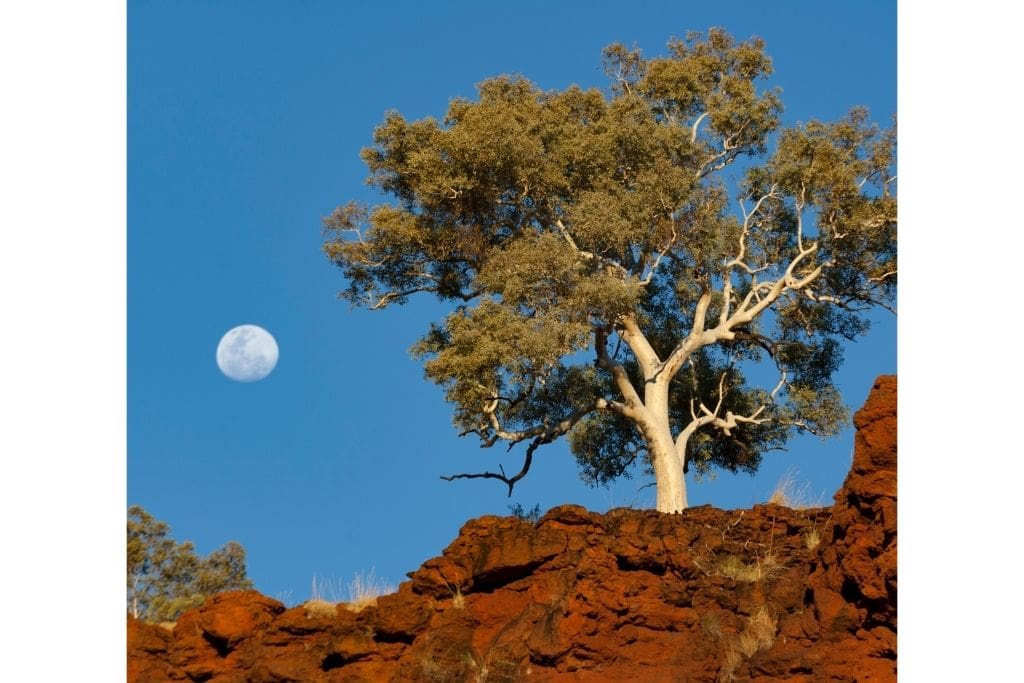
The vibrant red soil of the Pilbara gets its color from the gradual oxidation of iron minerals. This process has taken place over the course of millions of years. This “laterite” soil paints the landscape with rusty tones, defining the region’s geological identity.
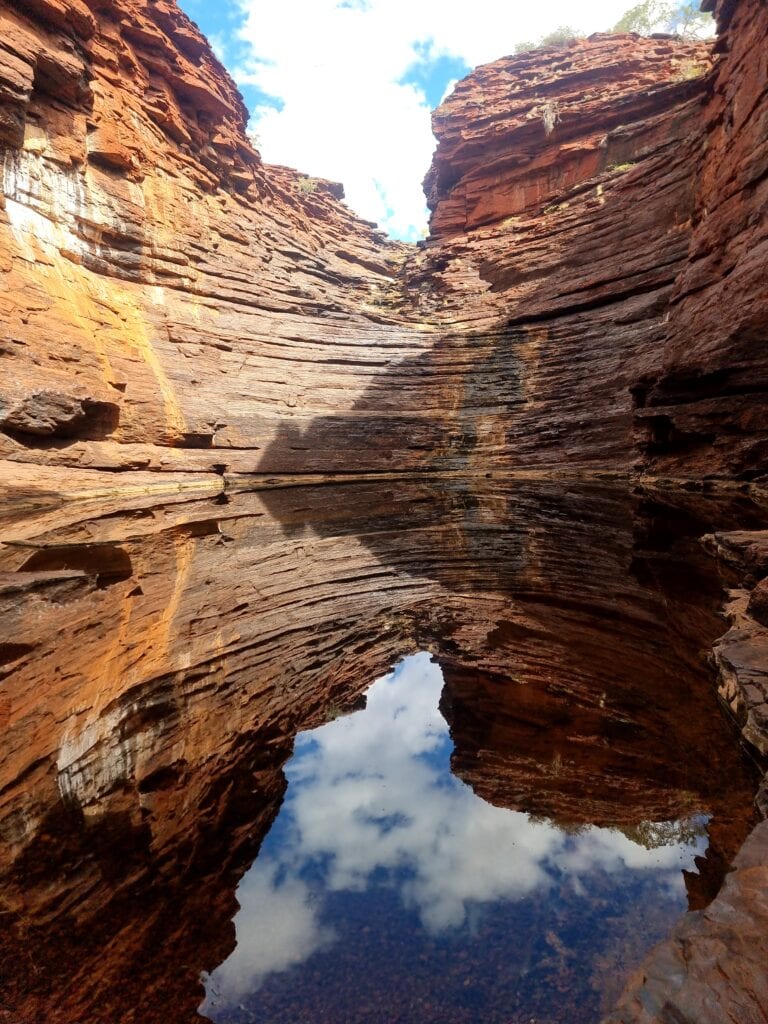
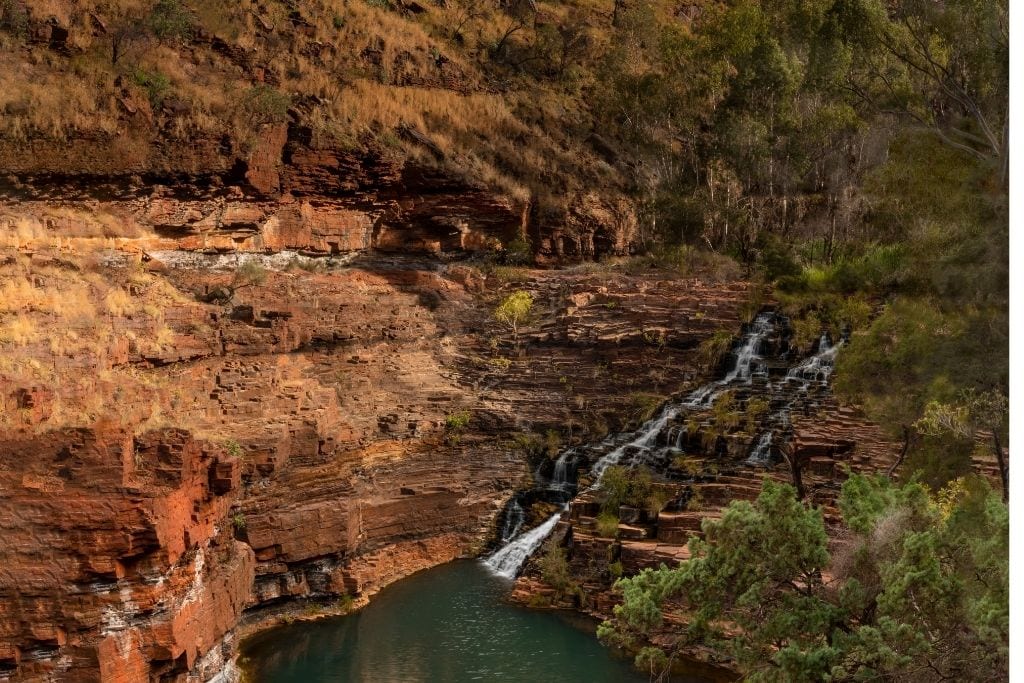
Water shapes Karijini’s rugged terrain despite its arid climate. Heavy rainfall triggers flash floods, carving deep gorges over time. These torrents nourish cascading waterfalls and rock pools, sustaining a diverse ecosystem.
In essence, Karijini’s geological features testify to the timeless interplay of natural forces. Time, water, and mineral-rich earth have crafted a landscape of unparalleled beauty. Experience the marvels of Karijini National Park, a testament to nature’s power in the heart of the Pilbara.
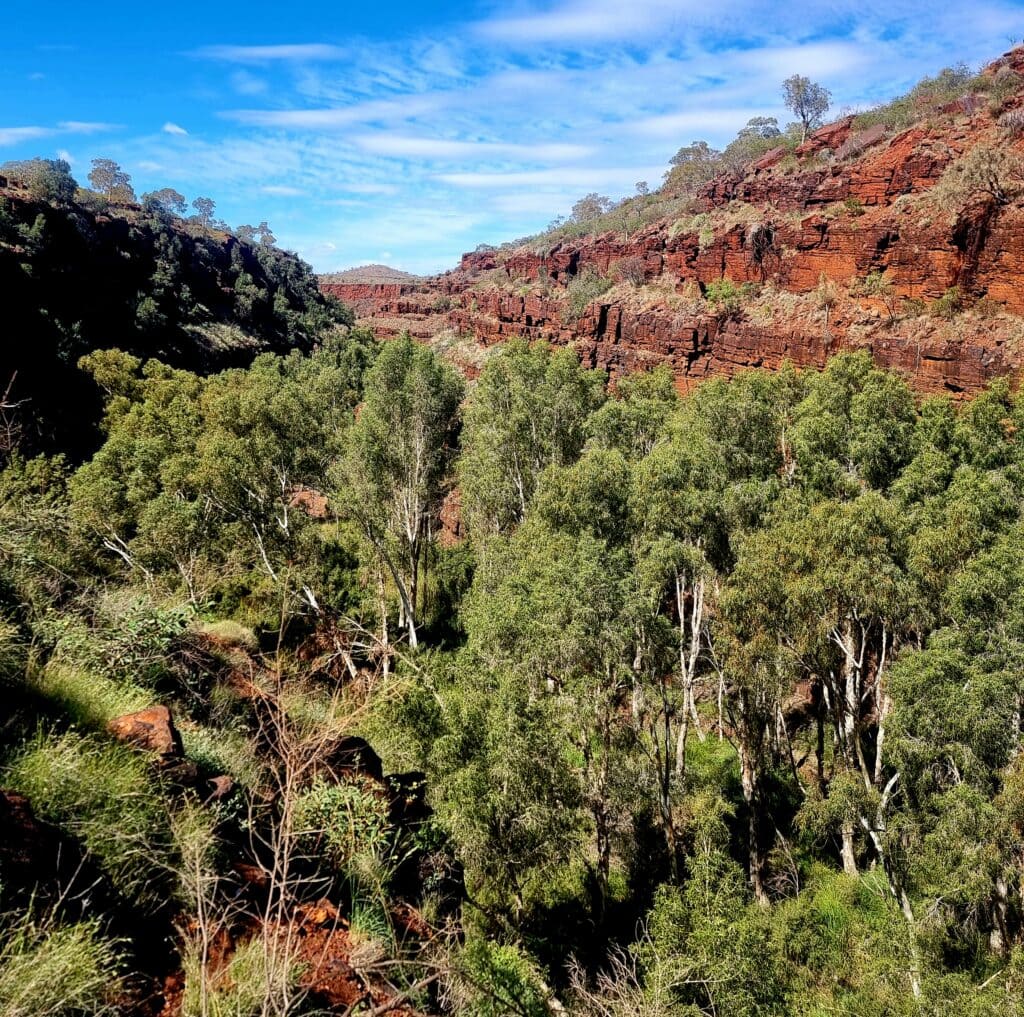
Stunning Gorges
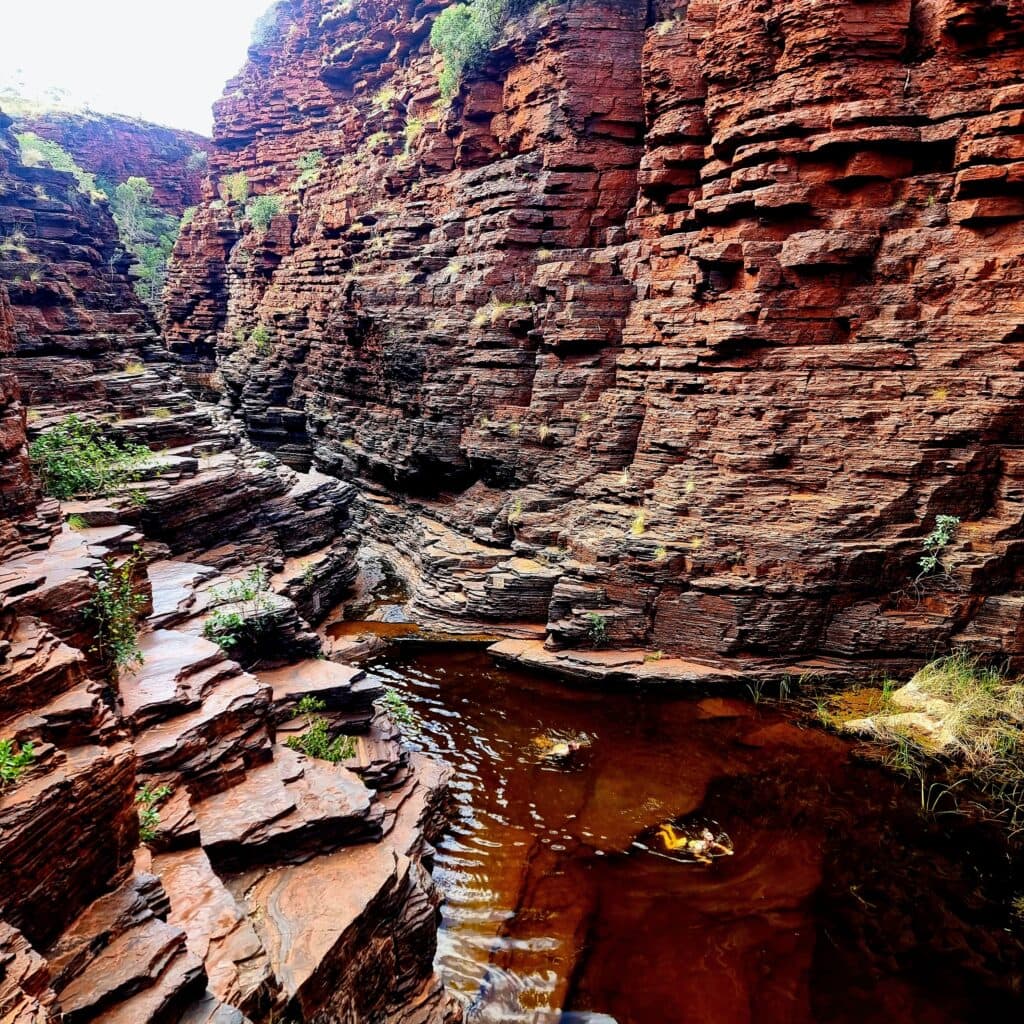
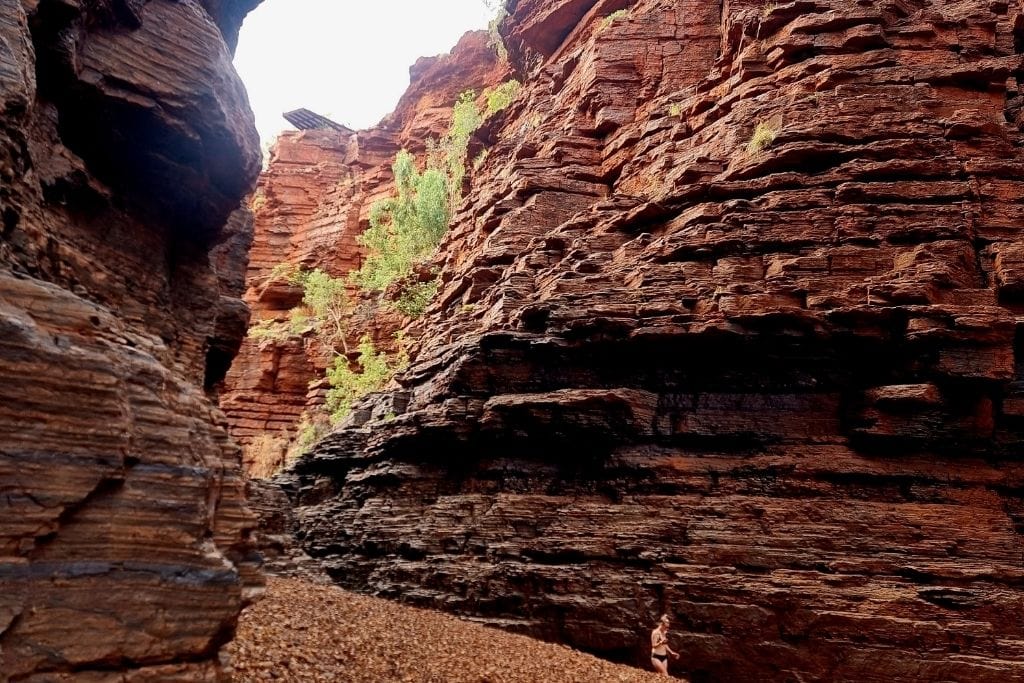
The gorges are stunning. These walks are where you find cascading waterfalls and tranquil rock pools.
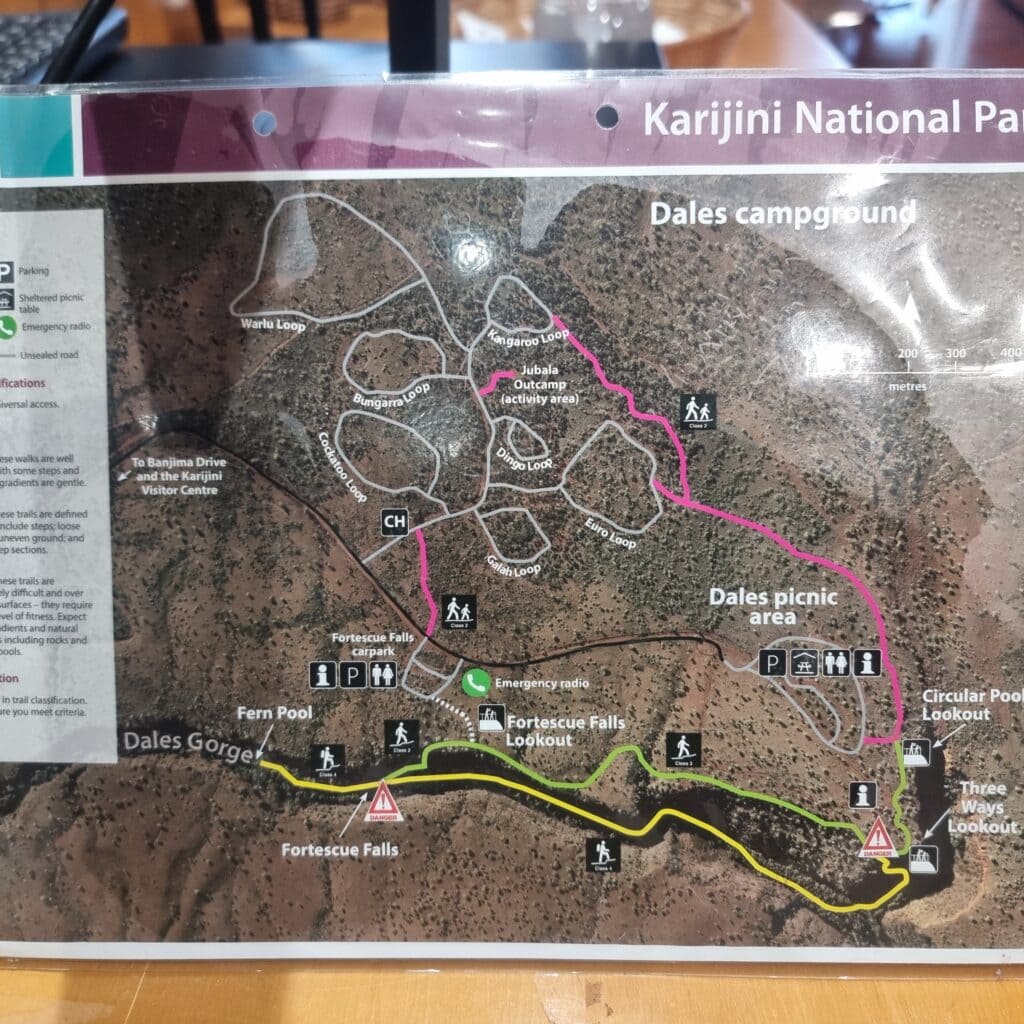
I stayed at Dales Gorge and swagged it for a week. Dale’s Gorge is where you will find Fortesque Falls and Fern Pool. This was the best spot. I loved it.
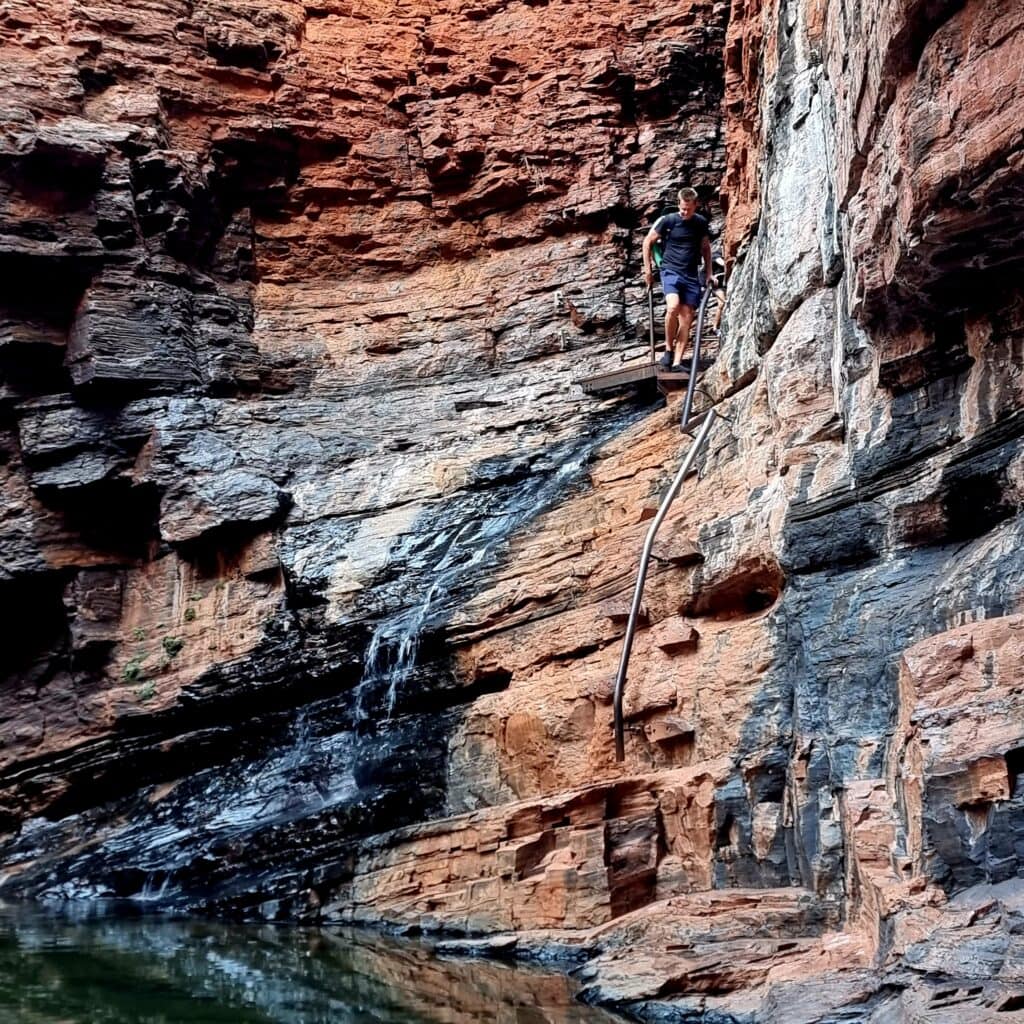
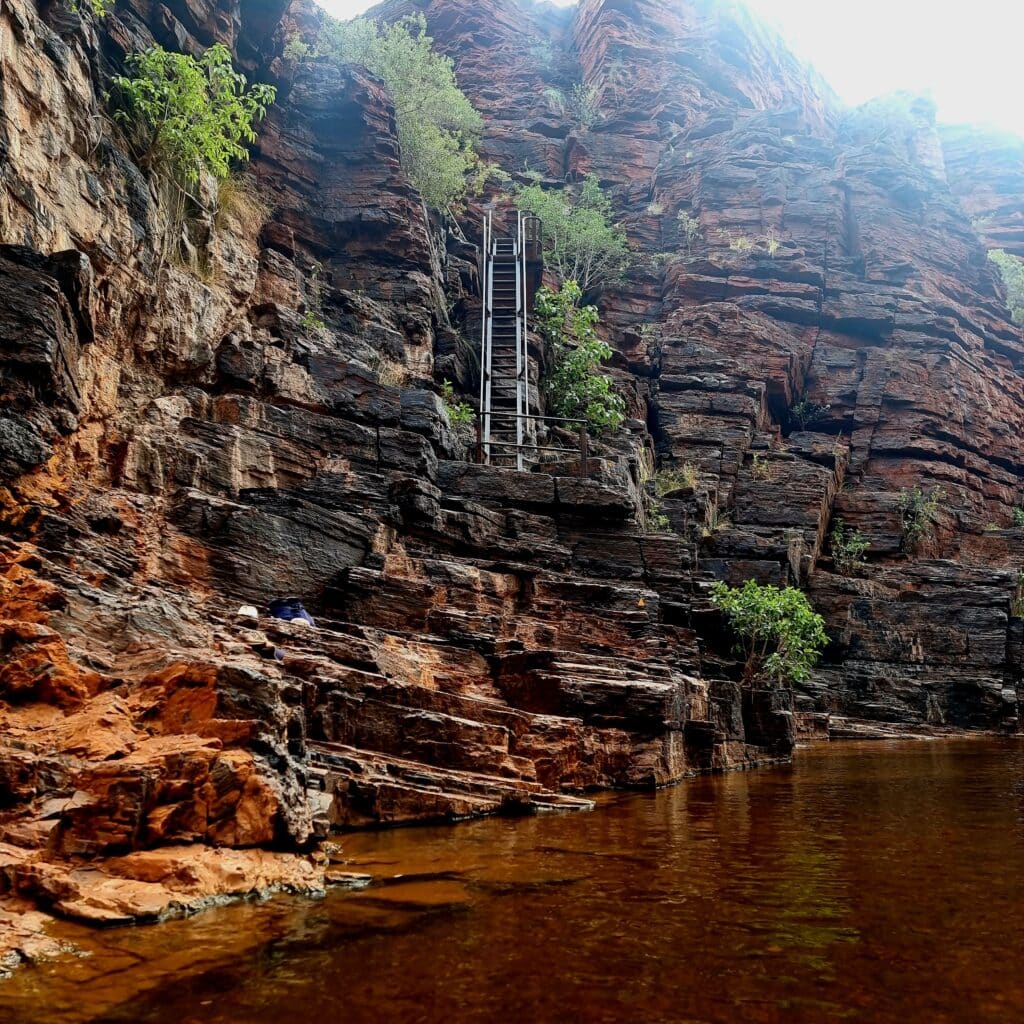
Experience the stunning Handrail Pool in Hancock Gorge! You trek through the gorge, surrounded by towering cliffs, and it is super slippery in places. Suddenly, you reach the end where a handrail leads you into the crystal-clear pool. It’s seriously stunning!
Breathtaking Waterfalls
Tucked away in Karijini National Park are some of Western Australia’s most stunning waterfalls. From the rugged beauty of Joffre Falls, which come alive after good rain, to the striking Hamersley Gorge and the year-round flow of Fortescue Falls, each has its own magic.
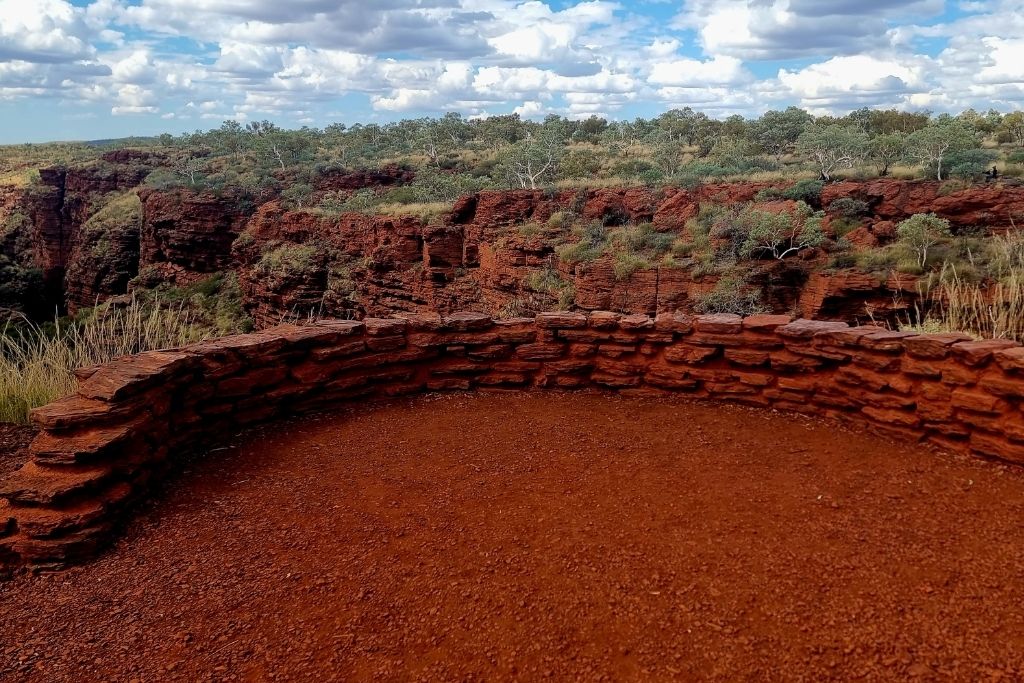
Start your adventure at Joffre Gorge, just a short walk from the Karijini Eco Retreat.
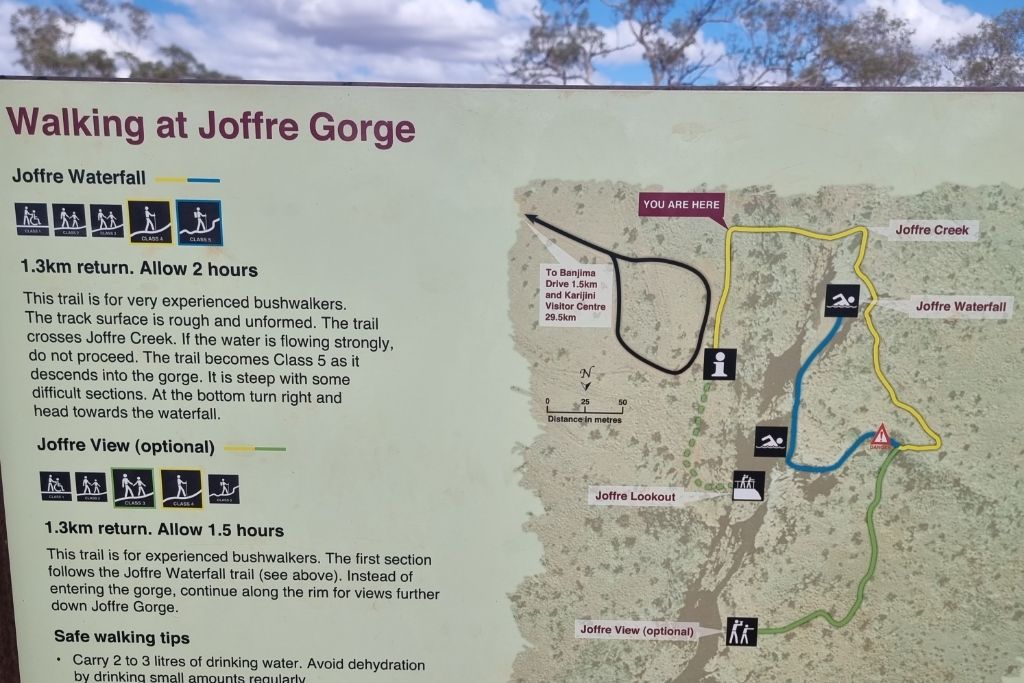
The track winds through red rock and spinifex before opening up to sweeping views of the gorge below. Take a moment at the lookout — when the water’s running, it’s pure outback perfection.
Venture deeper into the gorge to discover its natural amphitheatre. The curved walls form a dramatic backdrop for an impressive waterfall that flows generously after rain showers. This waterfall was dry when I arrived in April, so by the time the wet season arrives, you may see it in fall splendour.
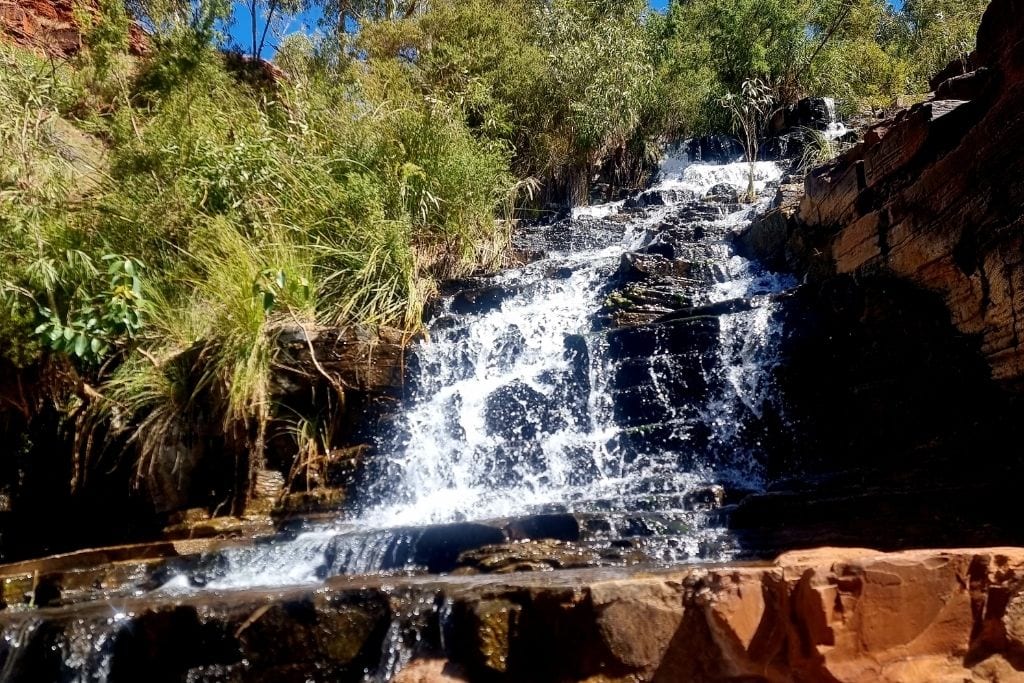
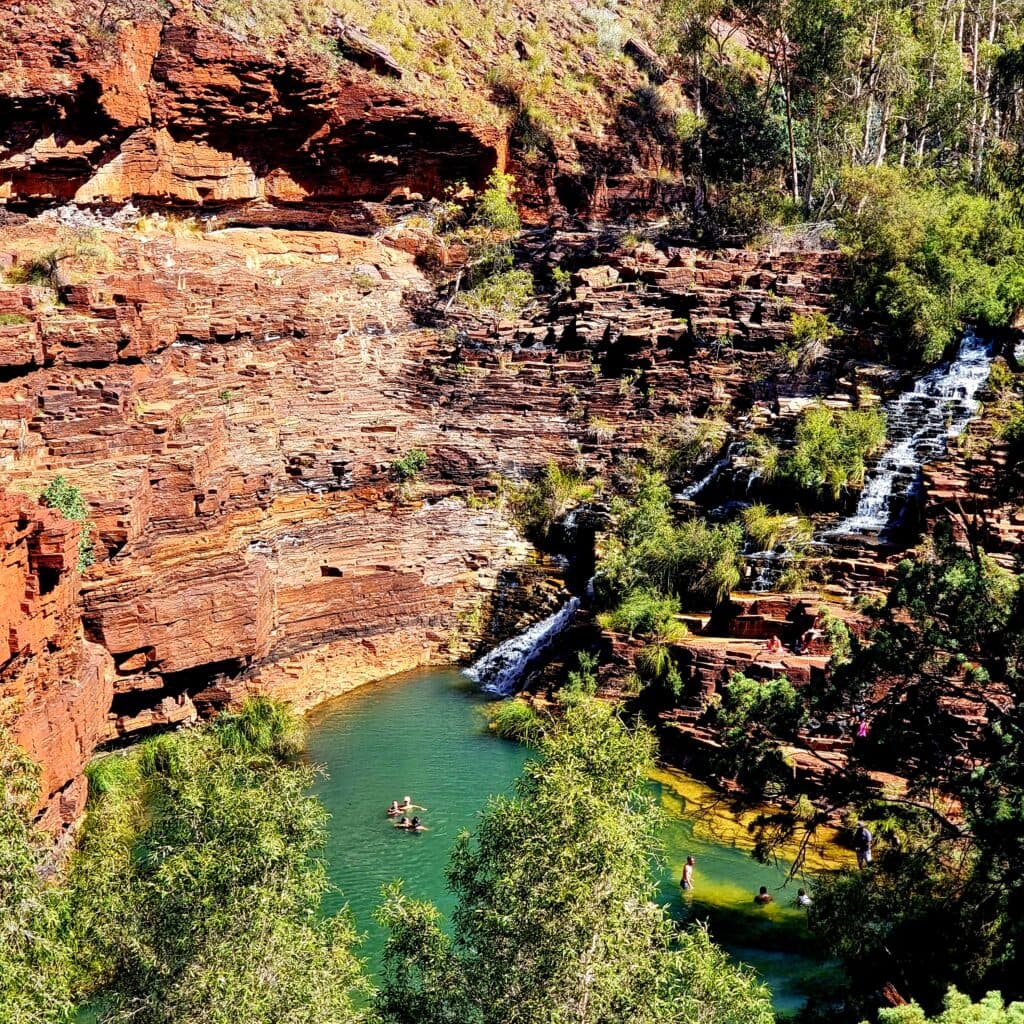
Continue your exploration to Fortescue Falls, the park’s only permanent waterfall, nestled within the depths of Dales Gorge.
You can descend into the gorge from the car park via the stairs or on the hike for the more adventurous.
The rocks take on a richer red and purple hue. Fed by a spring, Fortescue Falls is a perfect spot for a refreshing swim.
Fern Pool
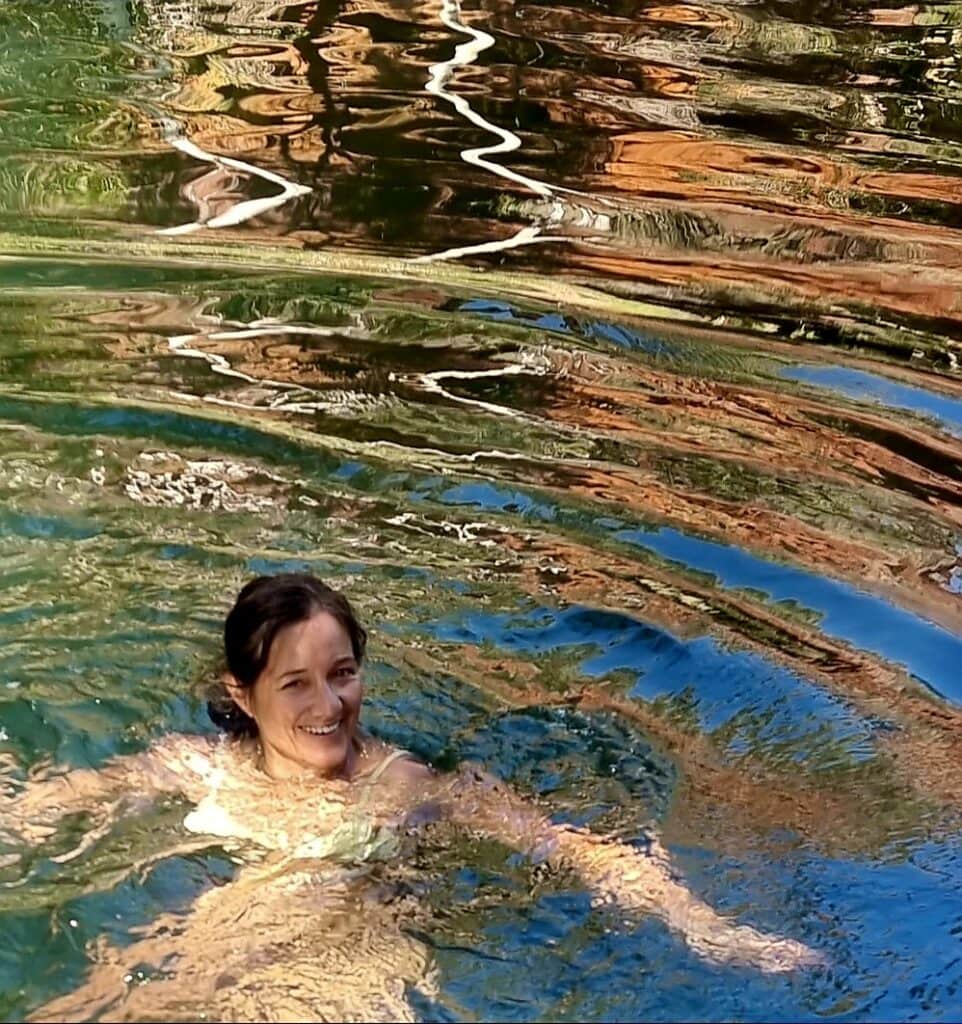
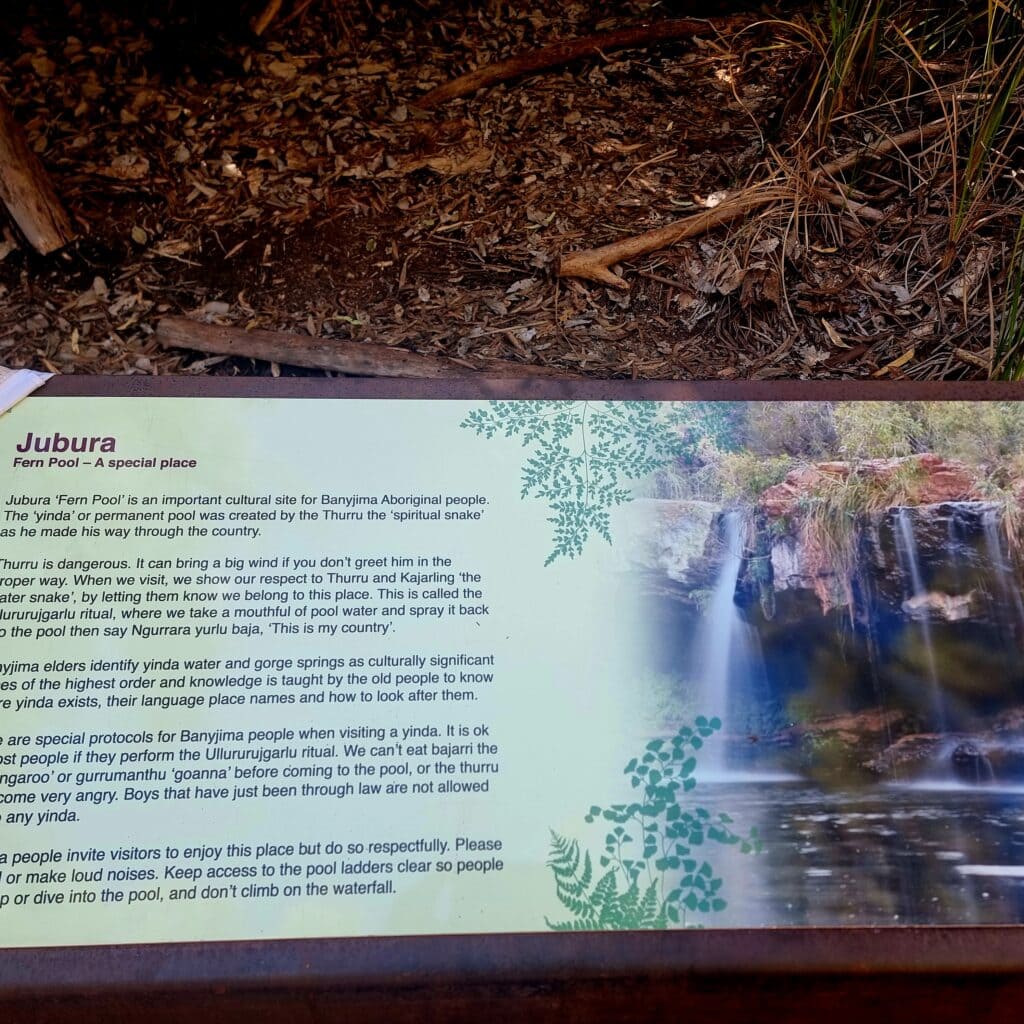
As you traverse the Dales Gorge Trail towards Fern Pool, take in the sights and sounds of the creek-side hike, where wildlife may be spotted amidst the verdant surroundings. Arrive at Fern Pool. It is a tranquil oasis surrounded by delicate ferns and paperbarks. Visitors are encouraged to enter the water quietly. They should respect its sacred Aboriginal significance. Take a moment to acknowledge the Dreamtime serpent said to inhabit the waters before immersing yourself in the refreshing spring-fed waterfall and grotto.
Unique Wildlife and Flora
Experience the Rich Diversity of Wildlife in Karijini National Park
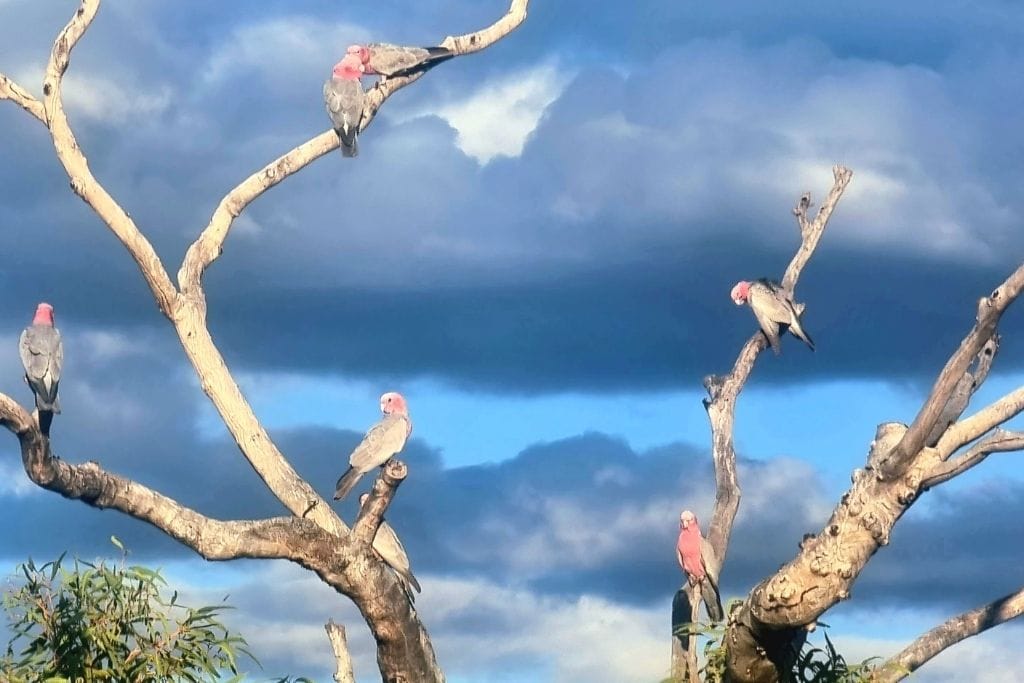
Explore the vibrant ecosystem of Karijini National Park, where over 125 species of birds thrive, especially in the fringing vegetation along pools and streams. Keep an eye out for the endemic spinifex pigeon, distinguished by its tall head crest—a true symbol of the park’s unique avian diversity.
While exploring the park’s rocky terrain and lush landscapes, keep an eye out for a variety of iconic Australian animals.
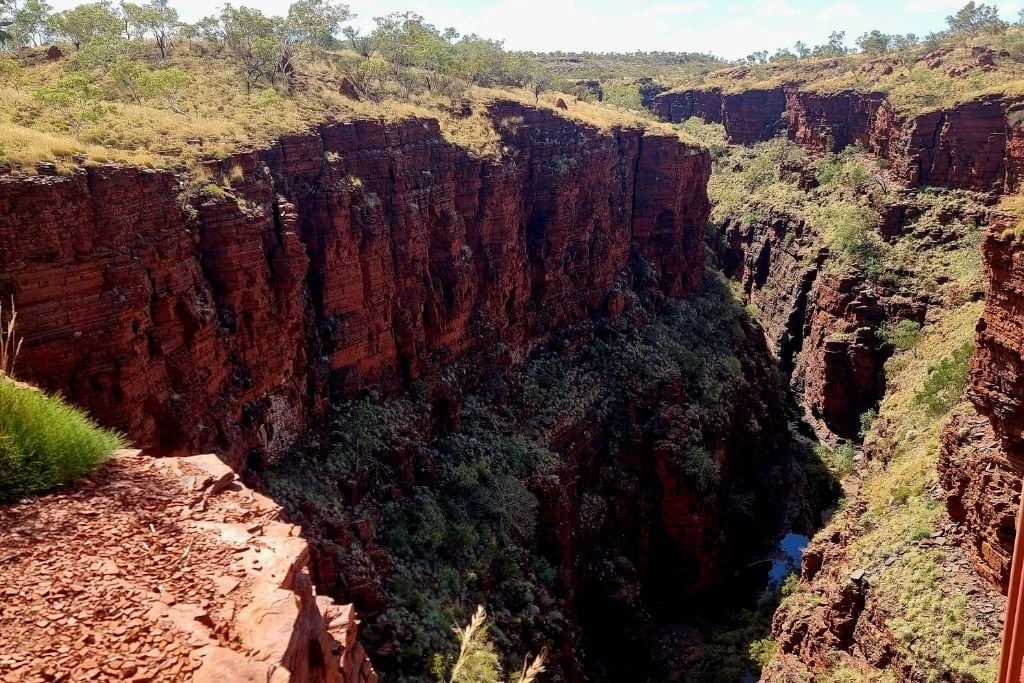
Spot red kangaroos, euros, and Rothschild’s rock wallabies as they gracefully navigate their rocky habitats.
Keep your senses sharp to catch a glimpse of echidnas, dingos, and various species of bats that call Karijini home.
DON’T FEED THE DINGOES
Don’t feed the dingoes. When I was there, a dingo had mauled a child, and after I left, another was attacked. Please read my post on Australian Wildlife Safety Tips: 5 Smart Travel Rules, which will help you navigate the environment.
As night falls, Karijini reveals a whole new side of itself. Step quietly and you might spot the elusive northern quoll or the tiny Pilbara ningaui, two of the park’s more secretive residents. The darkness also brings out a lively mix of native rodents and small marsupial hunters, along with a chorus of frogs and the flicker of geckoes, goannas, and even legless lizards. It’s a reminder that the park doesn’t sleep — it just changes rhythm.
Keep an eye out for the bungarra, or sand goanna, a majestic reptile that can grow up to 1.6 meters in length. Watch as it forages and senses the air with its forked tongue, blending seamlessly into its natural surroundings.
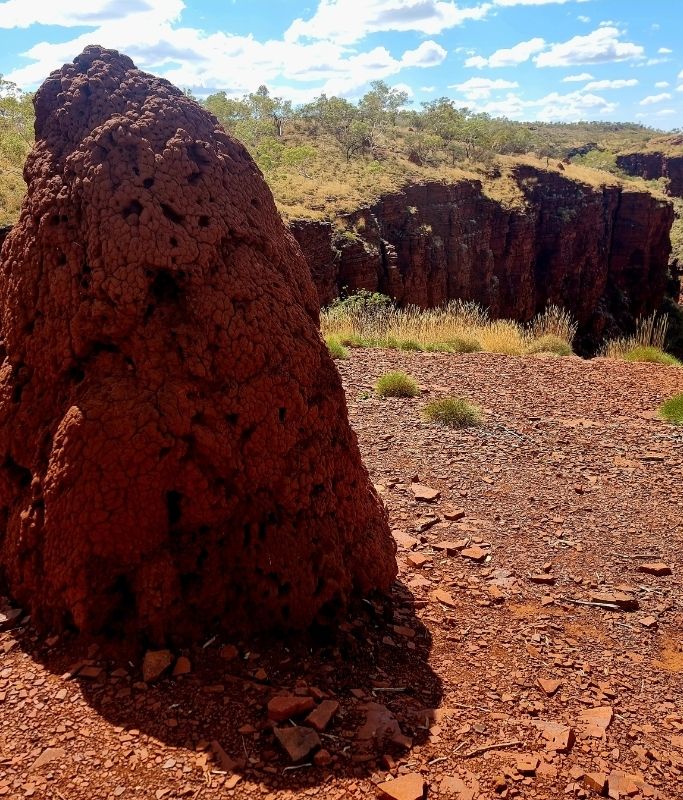
As you explore the park’s diverse landscapes, take note of the intricate termite mounds scattered throughout the spinifex grasslands. Observe the rock piles built by the rare Western pebble-mound mouse. This mouse is an exclusive resident of the Pilbara region. While marvelling at these natural wonders, remember to tread lightly and avoid disturbing their delicate habitats.
No Crocodiles
Rest assured, there are no crocodiles in Karijini National Park, allowing you to enjoy the pristine streams and rock pools in peace. Keep your eyes peeled for little fish darting through the crystal-clear waters, particularly in popular spots like Fern Pool and Kalamina, adding to the park’s allure as a haven for both wildlife and nature enthusiasts alike.
Visiting Karijini National Park – Where to Stay
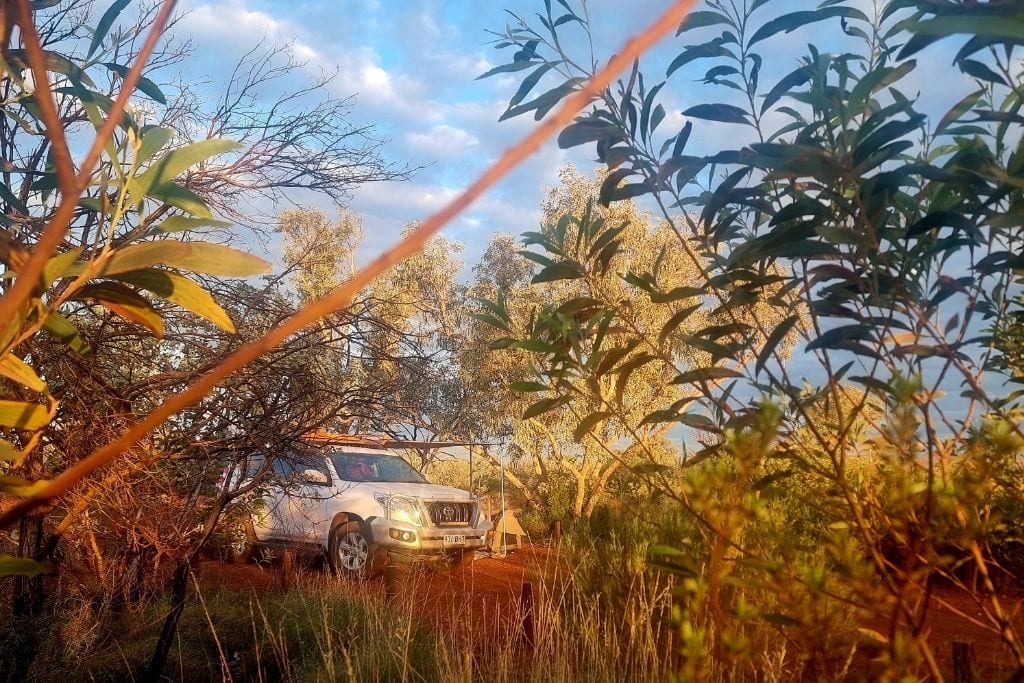
This was my set-up at Dales Gorge Camping Ground. I did get a few dingo visitors at meal times and outside my swag. That was definitely interesting!
I was getting ready to eat when a dingo appeared. I also heard a couple outside my swag during the night.
There are other camping sites, but if you want a bit more glam, there is the Karijini Eco Retreat.
Karijini Eco Retreat
The Karijini Eco Retreat offers a unique opportunity to immerse yourself in the pristine wilderness of Western Australia’s Pilbara region.
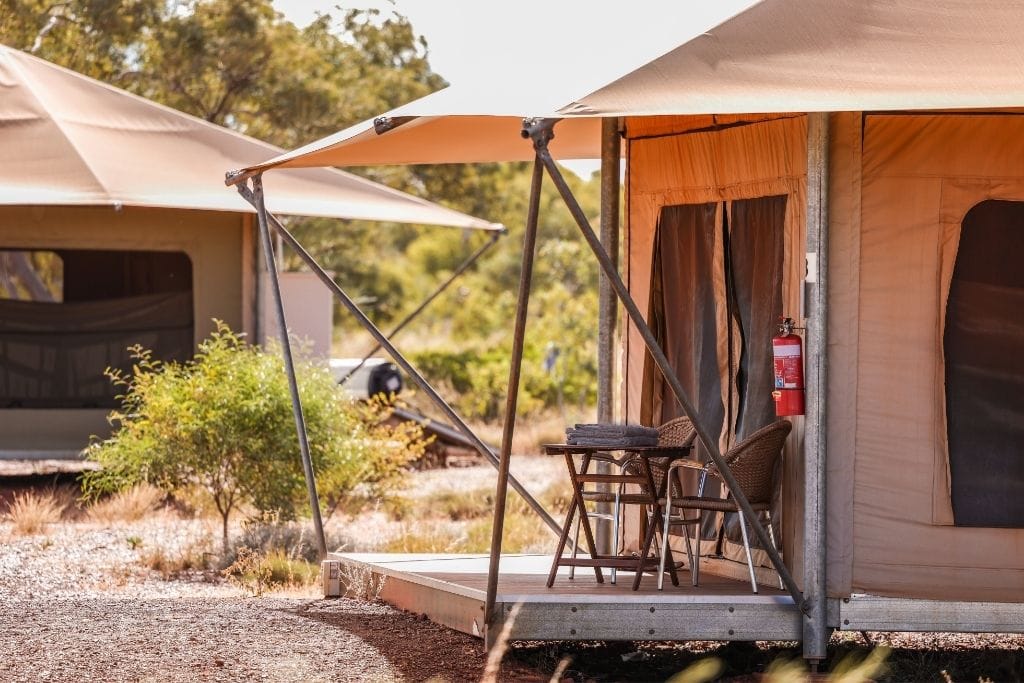
This eco-friendly retreat, nestled amid ancient gorges and towering red cliffs, offers comfort and serenity in nature’s heart.
Accommodation ranges from cozy eco-tents to luxurious glamping, ensuring a restful night under the star-studded outback sky.
Wake up to nature’s soothing sounds and explore nearby gorges and hiking trails for an adventurous day.
After a day of discovery, unwind with delicious locally sourced cuisine at the retreat’s restaurant or relax by the campfire. Whether you’re seeking a peaceful retreat or an action-packed outdoor adventure, the Karijini Eco Retreat promises an unforgettable experience that celebrates the beauty and tranquillity of Australia’s outback.
Karijini Visitors Centre
The Karijini Visitors Centre stands as a gateway to adventure and exploration. With its striking architecture mirroring the rugged beauty of the surrounding terrain, the centre invites travellers to embark on a journey of discovery.
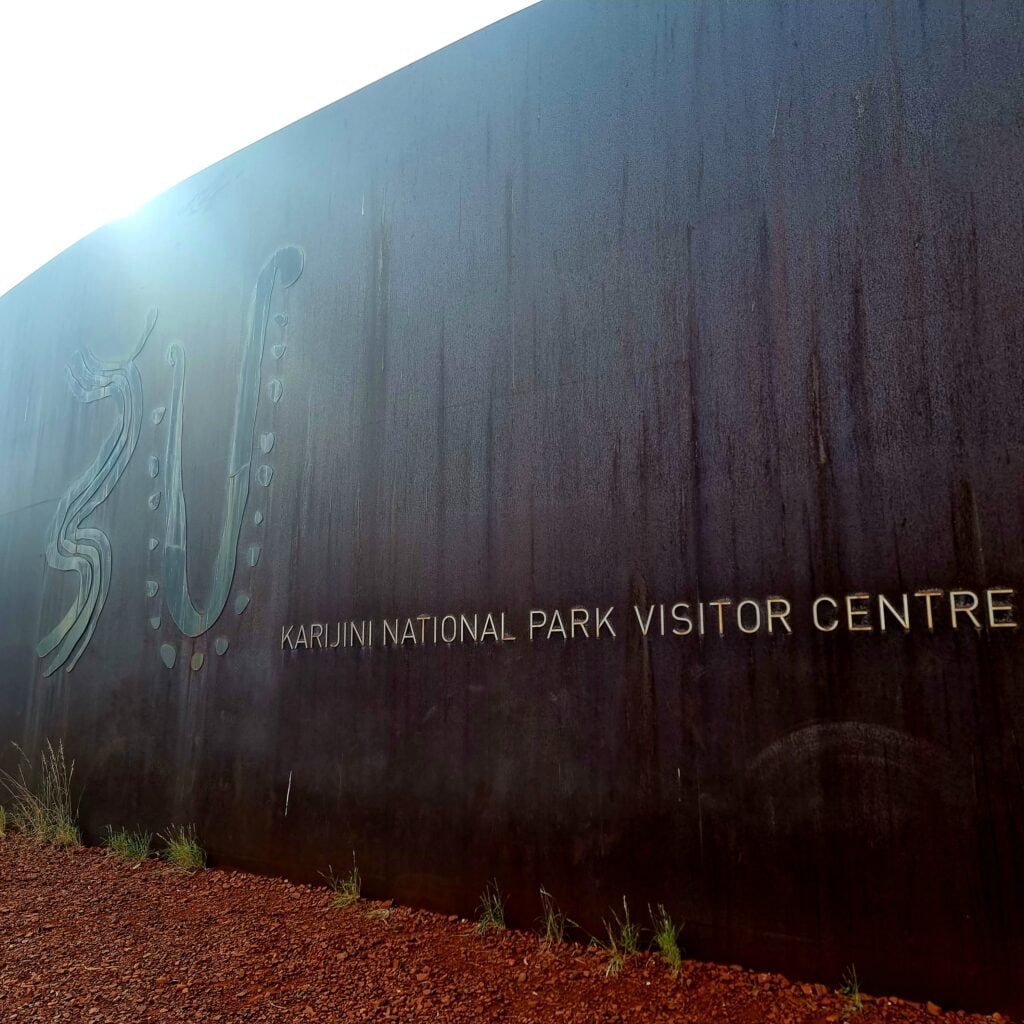
Friendly staff members are on hand to offer guidance and insight, ensuring every visitor’s experience is both educational and memorable.
Whether you’re planning your next hiking expedition or simply seeking a deeper understanding of this remarkable wilderness, the Karijini Visitors Centre is an essential stop on your Australian outback adventure.
HOT TIP – This is where you can get your maps and tips for the park + wet shoes for the slippery rocks in some of the gorges, especially Hancock and Weano Gorges. Frogs and Handrail Pools are a must-see in my opinion.
Verdict
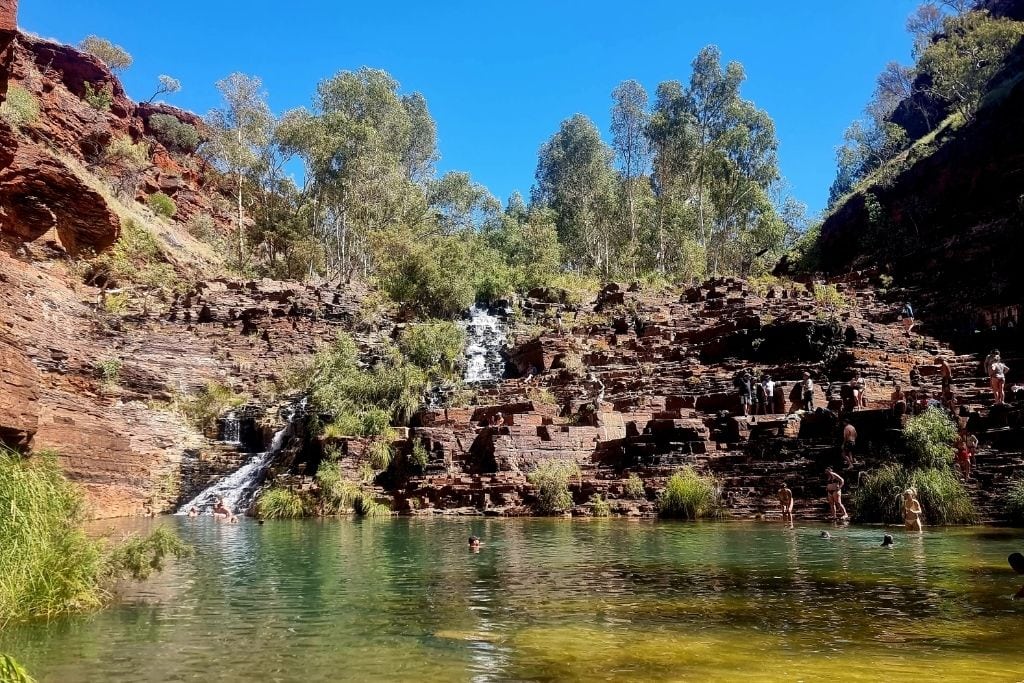
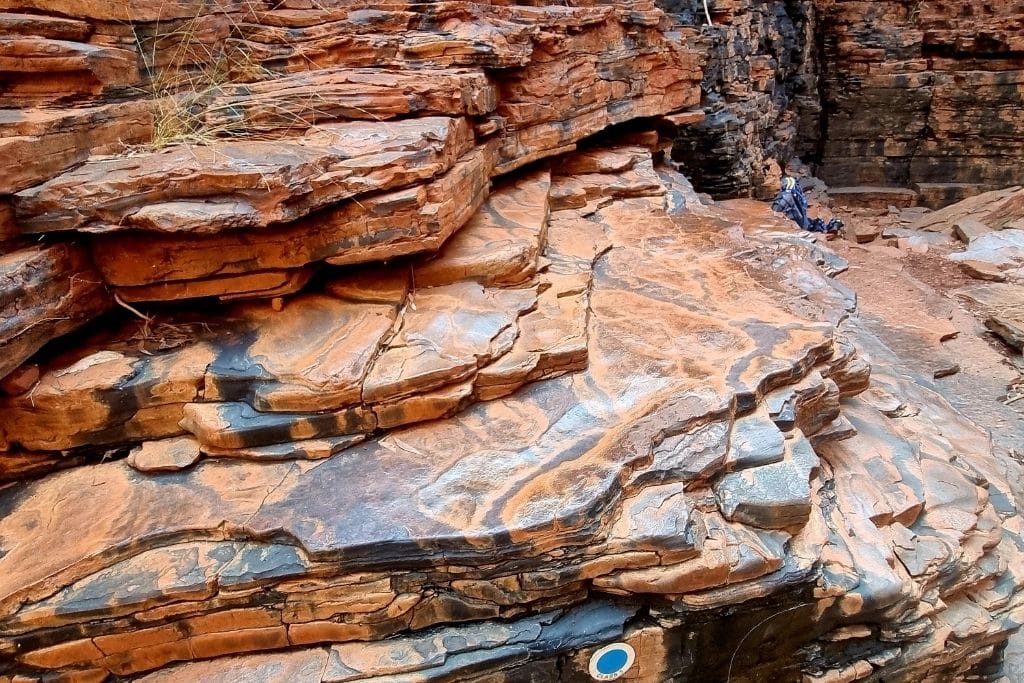
https://theinsightfulodyssey.com/the-ultimate-road-trip-guide-to-western-australia/Karijini National Park stands as one of my Western Australia Road Trip: 21 Must-See Spots in the Wild West, offering a tapestry of natural wonders that captivate the senses and stir the soul. From the iconic red dirt that blankets the landscape to the majestic gorges carved over millennia, every corner of this ancient wilderness invites exploration and discovery.
Experience Karijini by camping beneath the starlit sky. Cool off in tranquil rock pools beneath cascading waterfalls. Embark on exhilarating hikes through winding gorges. Karijini offers an immersive experience that showcases the raw beauty and untamed spirit of the Australian outback.
Karijini National Park is not just a destination. It is an unforgettable journey. This journey leaves a lasting imprint on all who venture into its rugged embrace.
If this type of National Park Adventure is for you, check out my other posts. They cover the Kimberley region, including the Gibb River Road, Cape Leveque and the lovely Broome. If you’re up this way, it is worth a look.


(photo credit Tourism Australia)
